





What's Happening?
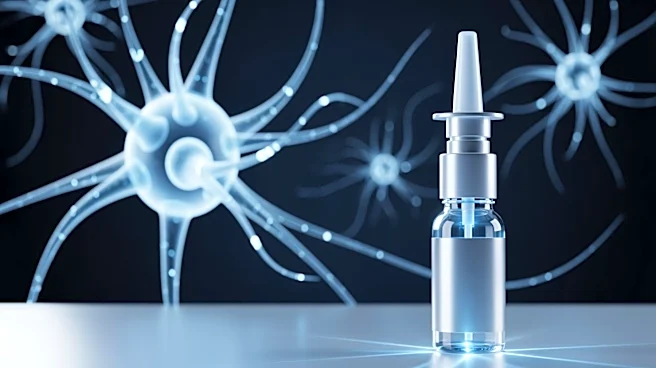
Researchers have developed a nasal spray that could potentially reverse brain aging and restore memory by reducing inflammation and enhancing brain cell energy. The treatment involves delivering tiny particles carrying microRNAs directly to the brain,
which act as master regulators to modulate gene and signaling pathways. This approach has shown promising results in middle-aged mice, where the nasal spray reduced the activity of overactive immune cells, lowered inflammation, and improved memory performance. The study, led by Dr. Ashok Shetty from Texas A&M University, highlights the potential of this non-invasive method to treat age-related brain conditions like dementia.
Why It's Important?
The development of this nasal spray is significant as it offers a simpler, less invasive alternative to current treatments for brain aging and memory loss, which often involve complex surgeries or long-term medication. With the aging population and the expected rise in dementia cases, this treatment could provide a more accessible and safer option for maintaining brain health. The ability to directly target the brain through intranasal delivery could revolutionize how neurodegenerative diseases are managed, potentially reducing healthcare costs and improving the quality of life for millions of individuals affected by these conditions.
What's Next?
Further research is needed to determine the safety and efficacy of this treatment in humans. Clinical trials will be essential to confirm whether the positive outcomes observed in animal studies can be replicated in human patients. If successful, this could lead to the development of a commercially available nasal spray for brain health, offering a new tool in the fight against dementia and other age-related cognitive declines. Researchers are optimistic about scaling this therapy and exploring its potential to replace more invasive procedures.