




What's Happening?
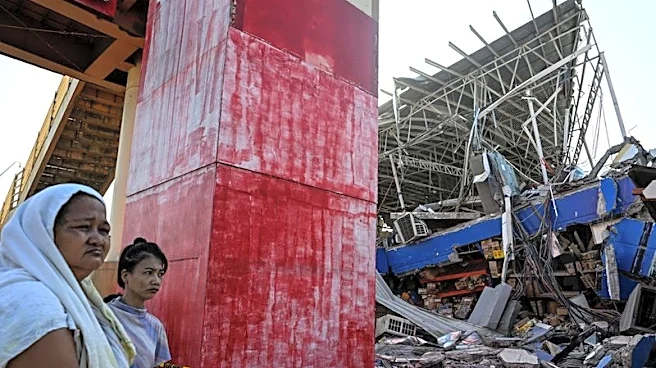
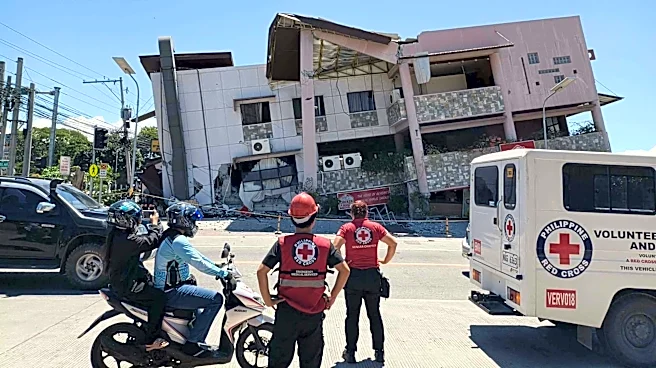
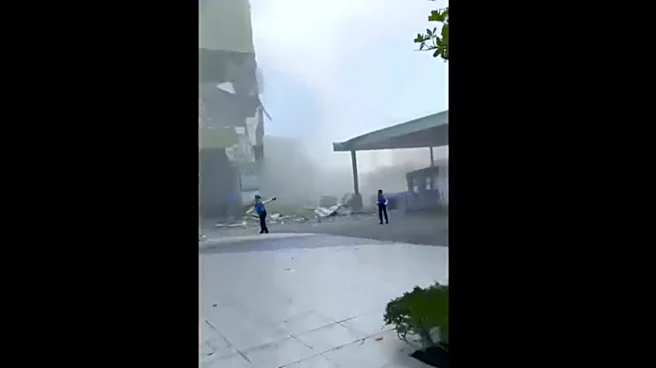
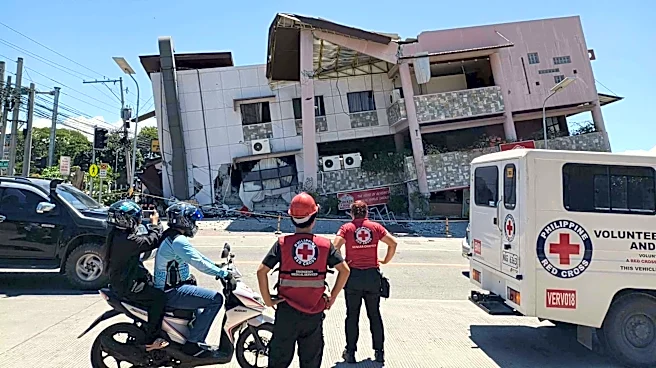
A powerful 7.8-magnitude earthquake struck the southern Philippines, resulting in at least 37 fatalities and displacing over 32,000 individuals. The earthquake, centered off Mindanao, caused significant structural damage, including the collapse of buildings
and landslides. The quake also triggered a 3-foot tsunami, which affected coastal areas. Rescue operations are ongoing as authorities search for survivors amidst the rubble. The earthquake is one of the strongest to hit the Philippines in decades, with the last comparable event occurring in 1976.
Why It's Important?
The earthquake's impact is profound, affecting thousands of residents who have been forced into emergency shelters. The destruction of infrastructure, including homes and schools, poses a significant challenge for recovery efforts. The event highlights the vulnerability of the Philippines to natural disasters, given its location on the Pacific 'Ring of Fire.' The international community, including the United States, has expressed readiness to assist in relief efforts, underscoring the global response to such disasters.
What's Next?
Authorities are focused on search and rescue operations, with ongoing assessments of structural damage. The government is coordinating relief efforts, including the distribution of food and construction materials. There is a heightened alert for potential aftershocks, which could further endanger already damaged structures. The international airport in General Santos remains closed, affecting travel and logistics. Long-term recovery will require significant resources and international support.