





What's Happening?
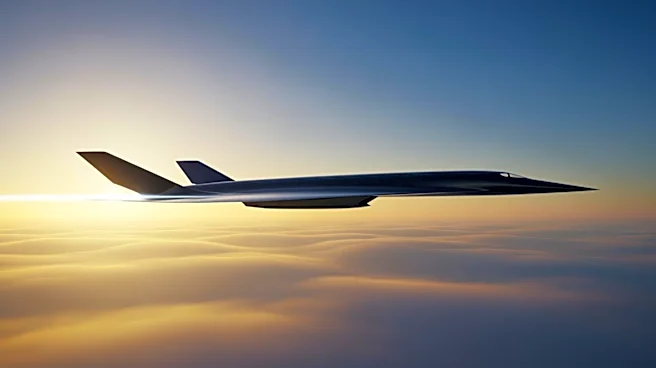
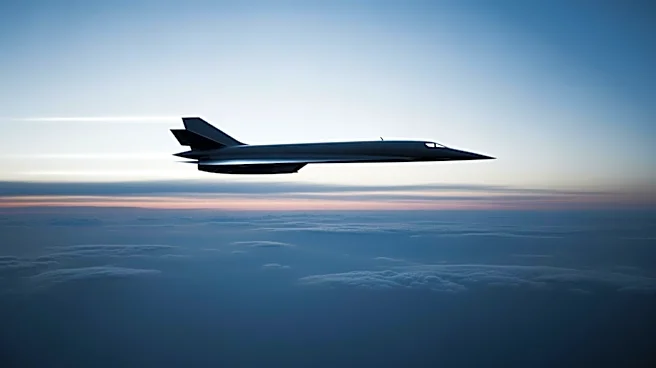
NASA's X-59 quiet supersonic research aircraft has achieved its highest and fastest flights to date, marking significant progress in its operational capabilities. On April 10 and April 14, 2026, the X-59 reached altitudes of 43,000 feet and speeds ranging
from 528 to 627 mph, approximately Mach 0.8 to 0.95. These flights represent the eighth and ninth tests for the aircraft, surpassing its previous altitude record of 32,000 feet set on April 7. The current phase of testing, known as envelope expansion, focuses on more than just speed and altitude. It also examines the aircraft's control performance, structural dynamics, and subsystems such as hydraulics, fuel, avionics, and landing gear. Additionally, the performance of the eXternal Vision System, which replaces the traditional forward windscreen with a series of cameras, is being evaluated.
Why It's Important?
The X-59's advancements are crucial for the future of commercial supersonic air travel over land. The aircraft is designed to reduce the loudness of a sonic boom to a gentle thump, a key factor in gaining regulatory approval for supersonic flights over populated areas. By flying the X-59 over select U.S. communities and gathering public feedback on the quieter sonic thumps, NASA aims to provide data to U.S. and international regulators. This data could lead to new regulations that permit supersonic travel over land, potentially revolutionizing air travel by significantly reducing flight times.
What's Next?
Future flights will continue to expand the X-59's operational envelope, focusing on various performance metrics and system evaluations. NASA plans to conduct community overflights to collect data on public perception of the quieter sonic thumps. The results will be shared with regulators to inform potential changes in supersonic flight regulations. The success of these tests could pave the way for commercial supersonic travel, offering faster travel options and potentially reshaping the aviation industry.