





What's Happening?
Lucien Smith, a prominent artist known for his multidisciplinary approach to art, passed away at the age of 37. His death was confirmed by his longtime friend and gallerist, Bill Powers, though no cause of death has been released. Smith's career began
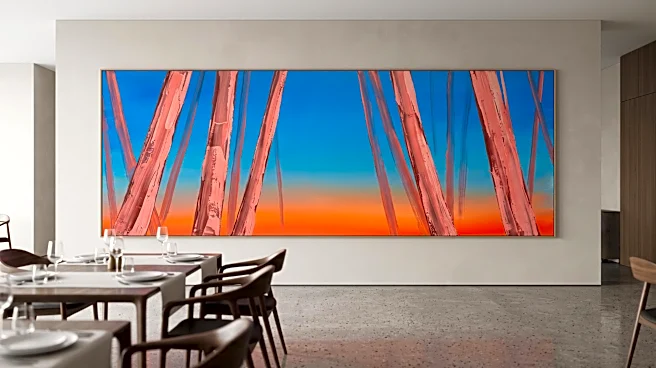
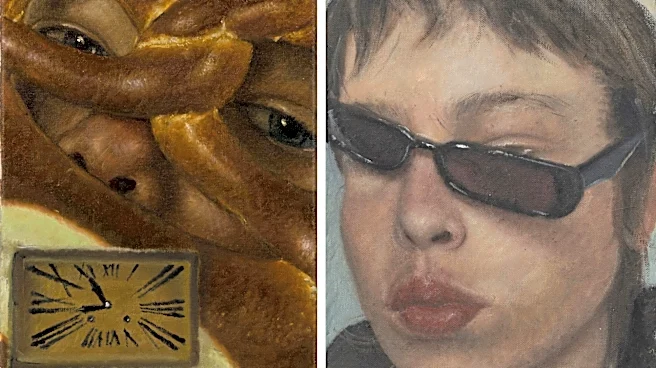
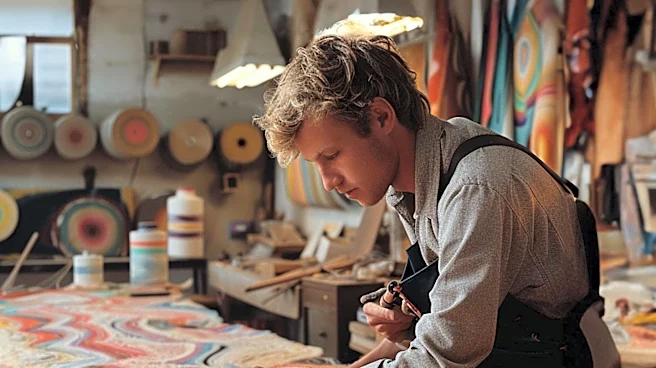
at a young age, gaining recognition while still an undergraduate at Cooper Union, where curator Jeanne Greenberg Rohatyn purchased a painting from his 2011 senior-thesis show. He quickly became known for his 'Rain Paintings,' created using a fire extinguisher to produce abstract fields of paint, which saw significant success on the secondary auction market. Beyond his artistic creations, Smith was a restless creative spirit who ventured into various fields, including NFTs, film, and even opening a restaurant named FOOD. In 2017, he founded Serving the People, a multidisciplinary platform aimed at supporting emerging talent in art, music, and film, providing an alternative to traditional gallery systems. Smith's network extended to fashion designers like Tremaine Emory, Heron Preston, and Virgil Abloh, further showcasing his diverse collaborations and influence.
Why It's Important?
Lucien Smith's passing marks the loss of a significant figure in the contemporary art world, whose career trajectory and innovative spirit had a notable impact on how art is created, exhibited, and perceived. His early success and the rapid appreciation of his 'Rain Paintings' highlighted a new wave of speculative money entering the art market, prompting discussions about the commercialization and valuation of young artists' work. Smith's establishment of Serving the People demonstrated a commitment to fostering new talent and challenging the conventional gallery model, offering an alternative platform for creative inquiry and experimentation. This initiative provided a crucial space for emerging artists to gain visibility and support outside established institutions. His diverse collaborations with figures in fashion and other creative industries also underscored a growing trend of interdisciplinary engagement, blurring the lines between different artistic and commercial fields. His restaurant, FOOD, further exemplified his desire to create community spaces for creatives, reflecting a broader cultural shift towards integrated artistic and social endeavors.
What's Next?
The art world will likely reflect on Lucien Smith's legacy, particularly his contributions to supporting emerging artists and his innovative approaches to art-making and exhibition. The future of his multidisciplinary platform, Serving the People, remains to be seen, but its foundational mission to nourish new talent may inspire similar initiatives. His final exhibition, 'Delay of Game,' featuring a new round of 'Rain Paintings' created on a baseball field in Montauk, is set to open on September 12 at Tripoli Gallery. This exhibition will serve as a poignant capstone to his artistic journey, offering a final look at his evolving practice. The closure of his restaurant, FOOD, 'until further notice,' suggests a period of transition for his various ventures. Discussions within the art community may also focus on the pressures faced by young, successful artists and the importance of mental health and support systems within the industry.
Beyond the Headlines
Lucien Smith's career and life offer a deeper look into the complexities of being a 'wunderkind' in the art world. His rapid ascent and the subsequent market speculation around his work brought both immense success and significant scrutiny. His decision to step back from the art world at times, seeking inspiration in Montauk and exploring other creative outlets like music and DJing, highlights the personal and artistic challenges that can accompany early fame. His later efforts to create alternative platforms and community spaces, such as Serving the People and FOOD, suggest a desire to redefine success beyond commercial metrics and to foster a more supportive environment for artists. Smith's journey underscores the ethical considerations surrounding the commodification of art and the responsibility of the art market towards artists' long-term careers and well-being. His story also reflects broader cultural trends of artists engaging with diverse media and seeking to build community outside traditional institutional structures.