
What's Happening?
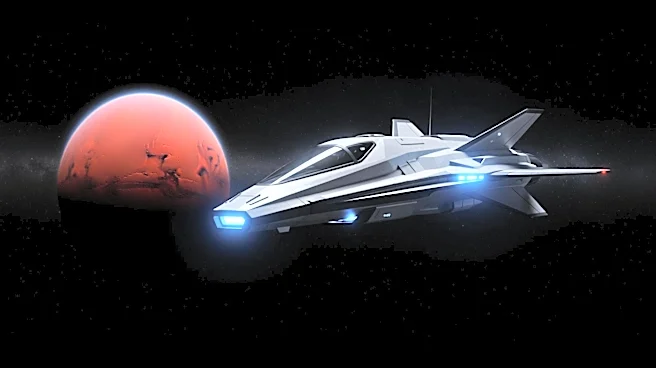
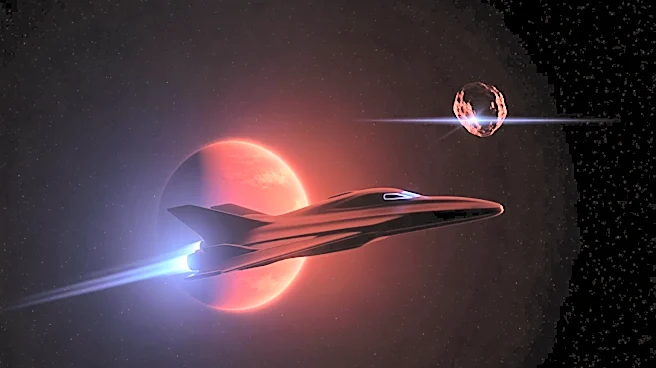
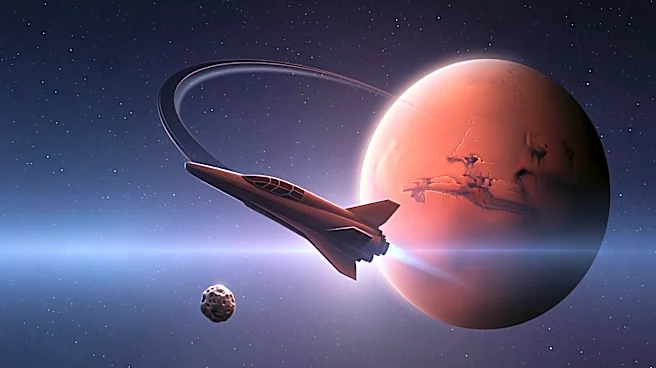
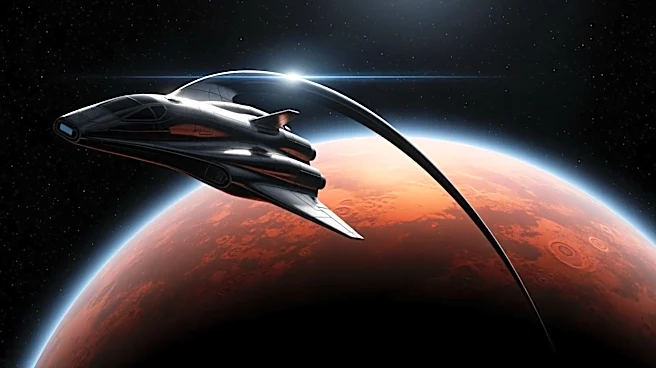
NASA's Psyche spacecraft is currently executing a flyby of Mars to gain a gravity boost as it continues its journey to a rare metal asteroid named Psyche. This maneuver is part of a six-year mission that
began in 2023, with the spacecraft expected to reach its destination in 2029. The flyby will bring the spacecraft within 2,800 miles of Mars, allowing it to capture thousands of images for both scientific and navigational purposes. The mission aims to study the asteroid, which is believed to be the exposed nickel and iron core of a protoplanet, providing insights into the early solar system and the formation of Earth. The spacecraft is equipped with solar electric propulsion and will use xenon gas thrusters to navigate through space.
Why It's Important?
The Psyche mission is significant as it targets one of the few metal-rich asteroids in the solar system, offering a unique opportunity to study the building blocks of planet formation. Understanding the composition and characteristics of such asteroids can provide valuable information about the early solar system, potentially revealing how planets like Earth developed their core structures. The mission also demonstrates advanced space travel techniques, such as using gravity assists to conserve energy and improve efficiency. This could pave the way for future deep-space exploration missions, enhancing our ability to explore distant celestial bodies.
What's Next?
Following the Mars flyby, the Psyche spacecraft will continue its journey towards the asteroid belt, where it will eventually enter orbit around the Psyche asteroid in 2029. Once in orbit, the spacecraft will conduct a two-year study of the asteroid's surface and composition. The data collected will be analyzed to understand the asteroid's structure and history, contributing to our knowledge of planetary formation. NASA's ongoing collaboration with international space agencies will also facilitate comparative studies with data from other Mars missions, enriching the scientific community's understanding of both Mars and the asteroid belt.