






What's Happening?
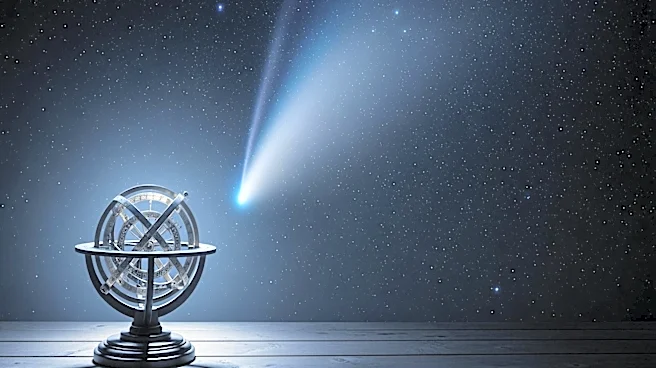
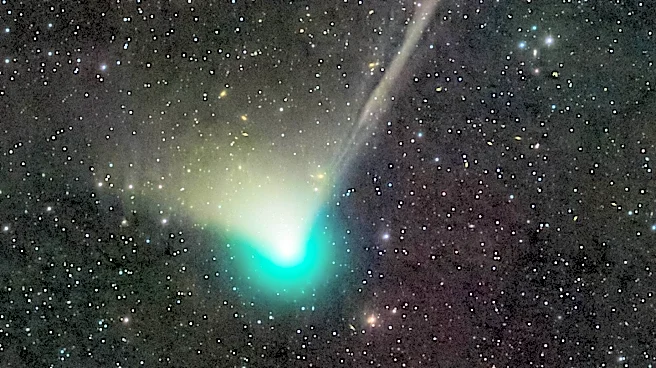
Recent research suggests that Halley's Comet, traditionally named after British astronomer Edmond Halley, may have been identified as a recurring celestial object centuries before Halley's time. The study, involving Professor Simon Portegies Zwart, highlights
the work of an English monk, Eilmer of Malmesbury, who reportedly recognized the comet's periodic return during the 11th century. This revelation is based on historical accounts by the 12th-century historian William of Malmesbury, which were previously overlooked. The researchers argue that Eilmer witnessed the comet on two separate occasions and understood their connection. Edmond Halley later became renowned for determining the comet's periodic nature, identifying it as the same object observed in 1531, 1607, and 1682, leading to its naming after him.
Why It's Important?
The findings challenge the historical attribution of the comet's name, suggesting that earlier observers may have recognized its periodic nature long before Edmond Halley's work. This could prompt a reevaluation of historical credit and recognition in the field of astronomy. The study also sheds light on medieval perceptions of comets, which were often seen as omens of disaster, influencing societal and royal decisions. Understanding these historical contexts enriches the narrative of scientific discovery and highlights the interdisciplinary nature of historical and scientific research. The potential renaming of such a significant astronomical object could impact educational materials and public understanding of historical scientific achievements.
What's Next?
The researchers plan to continue their interdisciplinary study of periodic comets, which may further illuminate historical observations and their implications. This ongoing research could lead to broader discussions within the scientific community about the naming conventions of celestial bodies and the recognition of historical contributions. Additionally, the study may inspire further exploration into other historical accounts of astronomical phenomena, potentially uncovering more instances where modern science can benefit from historical insights.
Beyond the Headlines
The study raises questions about the nature of historical narratives and the potential for 'fake news' in medieval times, as seen in reports of comets linked to significant events like the death of Archbishop Sigeric of Canterbury. This aspect of the research highlights the enduring human tendency to interpret natural phenomena through cultural and societal lenses, a practice that continues to influence public perception and scientific discourse today.