
What's Happening?
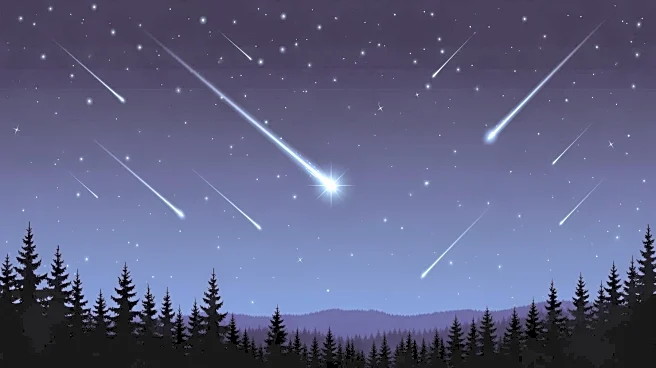
The Ursids meteor shower, a lesser-known celestial event, is set to peak during the overnight hours of December 21-22, 2025. This meteor shower is named after the constellation Ursa Minor, from which the meteors
appear to radiate. The Ursids are typically visible in the Northern Hemisphere and are best observed during the last dark hour before dawn. This year, the new moon on December 19 will provide dark skies, ideal for viewing. Historically, the Ursids have produced significant outbursts in 1945 and 1986, with several lesser enhancements reported in recent years. Meteor expert Peter Jenniskens has predicted an encounter with a dense filament of meteoric material on December 22, potentially increasing the hourly rate to 25 meteors. However, no unusually strong activity is forecasted for this year.
Why It's Important?
The Ursids meteor shower offers a unique opportunity for skywatchers and astronomers to observe a natural phenomenon that is not as widely recognized as other meteor showers like the Geminids. The potential for enhanced activity this year, as predicted by experts, could provide valuable data for scientific study and public interest in astronomy. The event also highlights the importance of dark skies for astronomical observations, emphasizing the need for light pollution management. For the general public, the Ursids offer a chance to engage with the night sky and foster interest in space science, potentially inspiring future generations of astronomers.
What's Next?
As the peak of the Ursids approaches, skywatchers are encouraged to monitor weather conditions to ensure clear skies for optimal viewing. Observers should look towards the northern sky, particularly in areas with minimal light pollution. The potential for enhanced activity, as suggested by meteor experts, may lead to increased interest and participation in skywatching events. Additionally, astronomers may use this opportunity to gather data on the Ursids, contributing to a better understanding of meteor showers and their parent comets. The results of these observations could inform future predictions and enhance public engagement with astronomical events.