






What's Happening?
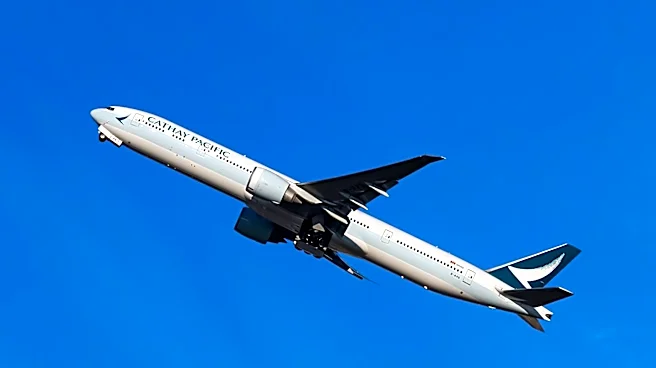
Asia Pacific airlines reported a 3.2% year-on-year increase in international air cargo demand for June 2026, driven by strong shipments of AI-related semiconductors and high-value goods. The Association of Asia Pacific Airlines (AAPA) noted that the international freight
load factor rose to 62.6%, reflecting robust demand. Despite a slight decline in passenger traffic due to higher airfares and capacity adjustments, the overall demand in revenue passenger kilometers increased by 1.1%. The first half of 2026 saw a 7.0% growth in international air cargo demand, highlighting the sector's resilience amid changing trade dynamics.
Why It's Important?
The growth in air cargo demand underscores the critical role of the aviation industry in supporting global supply chains, particularly for high-tech goods. The increased demand for AI-related semiconductors indicates a shift in trade patterns, with significant implications for the technology and logistics sectors. This trend may lead to increased investments in cargo infrastructure and technology to accommodate the growing volume of high-value shipments. The resilience of the air cargo market, despite economic headwinds, highlights its importance in maintaining global trade flows.
What's Next?
Asia Pacific airlines are expected to continue focusing on maintaining network flexibility and enhancing operational efficiency to adapt to evolving demand patterns. The ongoing geopolitical and trade policy uncertainties may pose challenges, but airlines are likely to explore strategic partnerships and investments to strengthen their market position. Stakeholders will be watching for any policy changes or economic developments that could impact the aviation and logistics sectors.