
What's Happening?
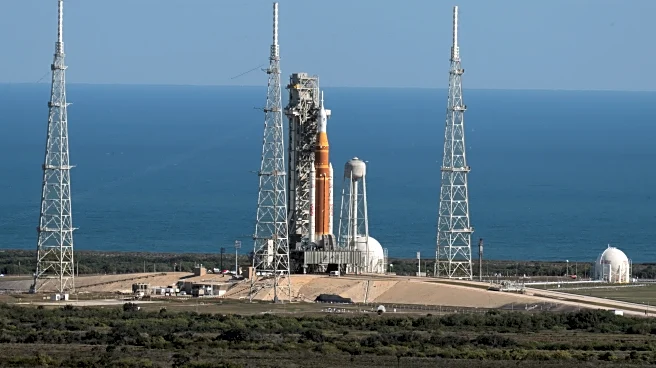
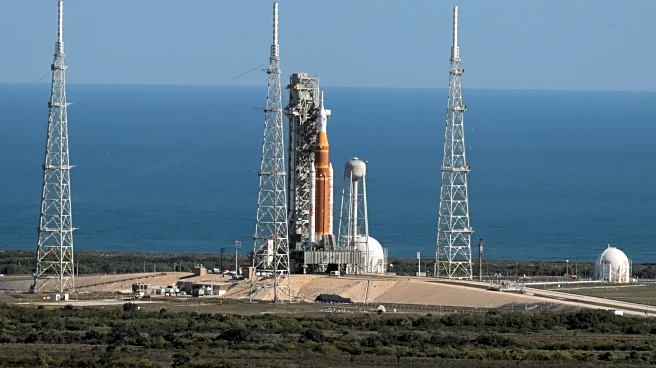
NASA has announced that the launch of the Artemis II moon rocket is scheduled for no earlier than February 8, 2026. This mission is part of NASA's ongoing efforts to explore the moon and beyond. The announcement
coincides with a series of notable astronomical events visible in the night sky throughout February. These include the appearance of winter constellations, the almost full moon covering the bright star Regulus, and the dance of Venus and Mercury in the sky. Additionally, the Zodiacal Light will be visible, and Sirius, the brightest star in the night sky, will be prominent. These celestial events provide a rich backdrop for the upcoming Artemis II mission, which aims to further human exploration of space.
Why It's Important?
The Artemis II mission is a critical step in NASA's Artemis program, which seeks to return humans to the moon and eventually establish a sustainable presence there. This mission will test the systems needed for future crewed lunar landings and is a precursor to more ambitious missions, including potential human exploration of Mars. The timing of the launch amidst significant astronomical events highlights the ongoing interest and investment in space exploration. For the scientific community and space enthusiasts, these developments underscore the importance of continued exploration and understanding of our solar system. The mission also represents a significant technological and logistical achievement, with potential implications for international collaboration in space exploration.
What's Next?
Following the launch of Artemis II, NASA will continue to prepare for subsequent missions in the Artemis program. These include Artemis III, which aims to land astronauts on the lunar surface. The success of Artemis II will be crucial in validating the technologies and strategies needed for these future missions. Additionally, the visibility of various celestial events in February may inspire increased public interest and engagement with space science. As NASA progresses with its lunar exploration goals, there may be increased opportunities for international partnerships and commercial involvement in space exploration.