
What's Happening?
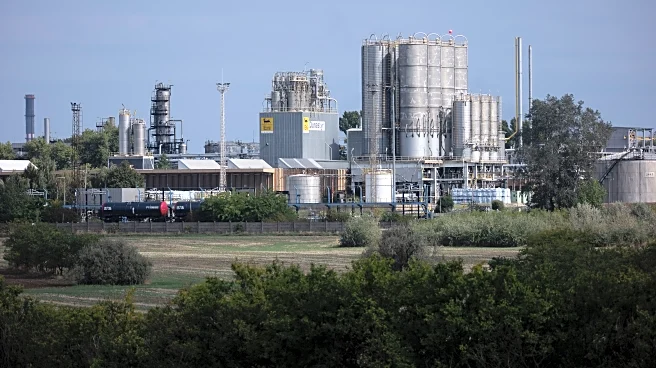
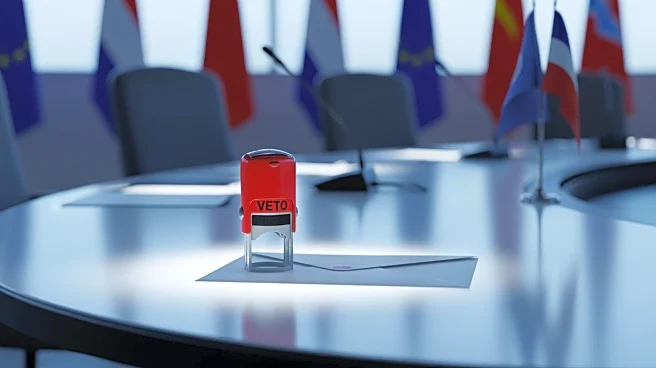
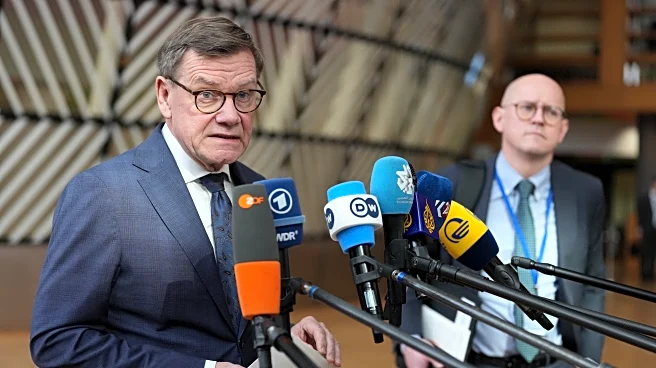
At the EU summit in Brussels, Hungary's Prime Minister Viktor Orbán's veto of a €90 billion loan to Ukraine has become a focal point of contention. Orbán has linked the veto to disruptions in oil deliveries through the Druzhba pipeline, demanding resolution
before supporting Ukraine. This move has drawn criticism from other EU leaders, including Latvia's Prime Minister Evika Siliņa, who emphasized the importance of adhering to previously agreed decisions. The summit also addresses the broader geopolitical tensions in the Middle East, with French President Emmanuel Macron calling for a cessation of attacks on energy infrastructure.
Why It's Important?
Hungary's veto highlights the challenges of achieving consensus within the EU, particularly on critical financial and geopolitical issues. The delay in financial support to Ukraine could have significant implications for the country's economic stability and its ongoing conflict with Russia. Hungary's stance may also reflect broader domestic political strategies, as suggested by some EU leaders. The situation underscores the complexities of EU decision-making processes, where unanimity is required for certain legislative actions. The summit's discussions on energy and security further illustrate the interconnectedness of regional conflicts and their impact on global economic and political dynamics.
What's Next?
The EU will likely continue diplomatic efforts to resolve the impasse with Hungary, potentially exploring alternative mechanisms to provide financial support to Ukraine. The summit may also lead to discussions on revising decision-making processes within the EU to prevent similar blockages in the future. As tensions in the Middle East persist, the EU may seek to enhance its diplomatic engagement and explore measures to stabilize energy markets. The outcomes of the summit could influence future EU policies on energy security, financial aid, and geopolitical strategy, shaping the bloc's role in addressing global challenges.