






What's Happening?
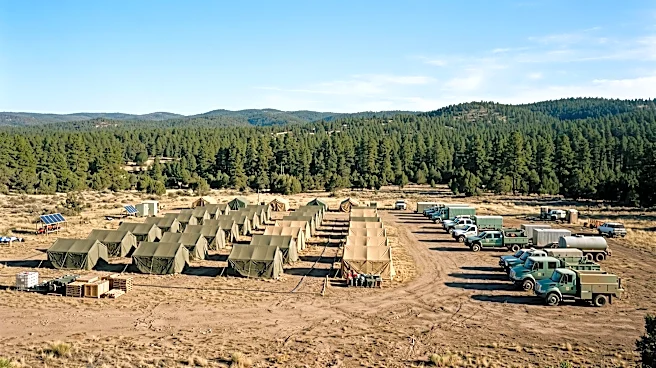
Security measures have been significantly increased at the base camp for firefighters battling the Frijoles Fire in New Mexico, following an incident where members of the public attempted to infiltrate the site on Friday night. DeLyn Sieliet of California
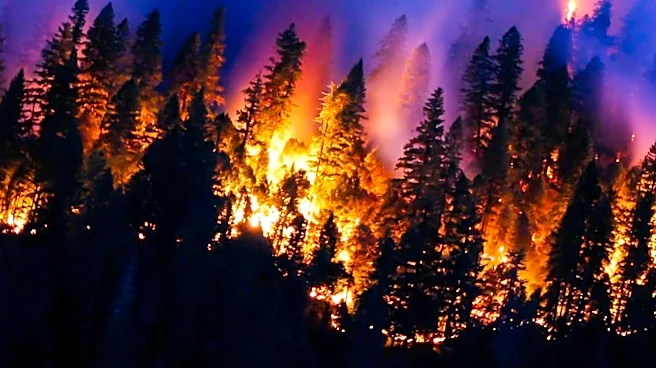
Incident Management Team 8 confirmed that 24-hour security is now in place, replacing the previous overnight security. According to the Forest Service, the intruders harassed incident management personnel with perceived threats before leaving the area. No injuries were reported during the incident. The base camp serves as a crucial recovery area for exhausted firefighters, who often work shifts lasting up to 16 hours. Officials stated that around-the-clock security will remain until the camp is dismantled. Meanwhile, FireNet reported 'good progress' on the lightning-caused Frijoles Fire, which is now 45 percent contained. The fire, New Mexico’s third-largest this year, has burned over 15,000 acres. Crews are focusing on extinguishing heat pockets along the western edge, with additional resources being reassigned to other areas. Evacuation statuses remain in effect for Cundiyo, Cerro Piñon, and the Borrego Mesa area, while Nambe Pueblo Lake is in 'Ready' status.
Why It's Important?
The intrusion at the Frijoles Fire base camp underscores the critical need for robust security protocols at emergency response sites, particularly during large-scale natural disasters like wildfires. The safety and well-being of firefighters are paramount, as they operate under already strenuous and dangerous conditions. Harassment or threats from the public can disrupt essential operations, divert resources, and negatively impact morale, potentially compromising the effectiveness of fire suppression efforts. This incident highlights the challenges faced by incident management teams in maintaining secure environments for personnel and equipment, especially in remote or accessible areas. The Frijoles Fire, having burned over 15,000 acres, represents a significant environmental and public safety threat in New Mexico, making any disruption to containment efforts a serious concern for affected communities and natural resources. Ensuring the uninterrupted operation of base camps is vital for the sustained effort required to control and extinguish such large wildfires.
What's Next?
The enhanced 24-hour security will remain a fixture at the Frijoles Fire base camp until the fire is fully contained and the camp is no longer needed. Law enforcement may investigate the intrusion incident further to identify and potentially prosecute those responsible for harassing personnel. Firefighting efforts will continue to focus on increasing containment, with crews working to extinguish remaining heat pockets and reassigning resources as needed. The 'Set' and 'Ready' evacuation statuses for surrounding communities will be continuously monitored and updated based on the fire's progression and containment levels. This incident may also lead to a review of security best practices for wildfire base camps across the region, potentially influencing future operational guidelines to prevent similar occurrences and better protect emergency responders.
Beyond the Headlines
This event reveals a less visible but significant challenge in disaster management: the interaction between emergency responders and the public, sometimes under stressful or misinformed circumstances. The perceived threats against incident management personnel could stem from various factors, including public frustration, misunderstanding of operations, or even malicious intent. Such incidents can erode public trust and cooperation, which are crucial for effective disaster response. It also highlights the psychological toll on firefighters, who not only battle dangerous blazes but also must contend with external pressures and security concerns. The need for clear communication between incident command and the public becomes even more apparent in these situations, to manage expectations, disseminate accurate information, and foster a supportive environment for those on the front lines. This incident serves as a reminder that comprehensive disaster preparedness extends beyond technical firefighting to include community engagement and security planning.