



What's Happening?
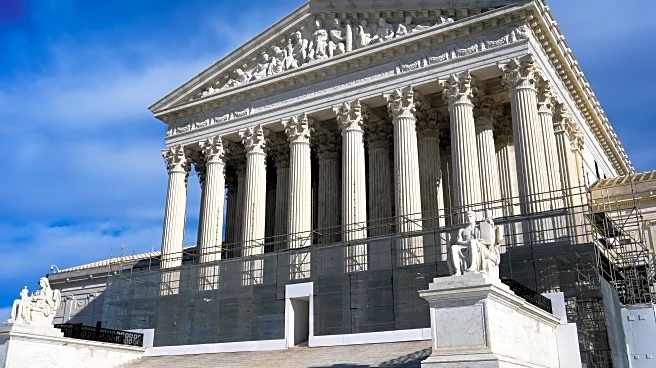
Following a Supreme Court ruling that struck down his emergency tariffs, President Donald Trump announced new 10% tariffs worldwide, citing the 1974 Trade Act instead of the International Emergency Economic Powers Act. Trump plans to use other legal authorities
to continue his tariff agenda, which has increased the average weighted tariff rate from 3% to over 15% in the past year. Justice Brett Kavanaugh suggested several legal paths, including the Trade Expansion Act of 1962 and the Tariff Act of 1930, which Trump may use to impose further tariffs.
Why It's Important?
The Supreme Court's decision limits the President's ability to impose tariffs unilaterally, but Trump is determined to maintain his trade agenda. The new tariffs could impact U.S. industries and consumers by increasing costs and affecting trade relations. The use of alternative legal authorities to impose tariffs could lead to further legal challenges and uncertainty in trade policy. The decision also highlights the ongoing tension between executive power and judicial oversight in trade matters.
What's Next?
Trump's new tariffs under the 1974 Trade Act will expire after 150 days, prompting speculation about his next steps. Analysts suggest that Trump may attempt to use Section 338 of the Tariff Act of 1930, which allows for tariffs up to 50%. The administration may also pursue Section 301 investigations, which require a formal process and findings. Existing trade deals are expected to remain intact, but the new tariff framework is likely to endure, raising questions about the actual relief businesses will see.