


What's Happening?
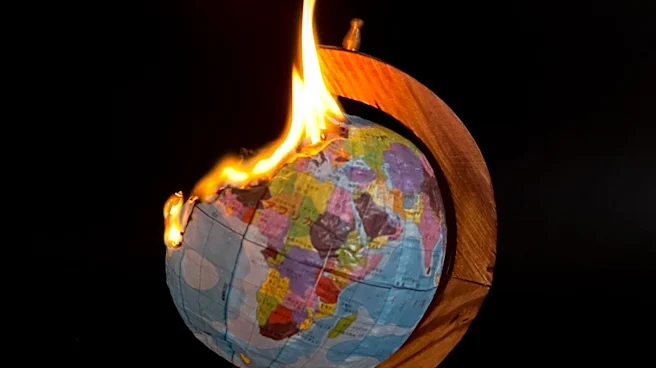
The latest Lancet Countdown report, developed by an international team of 146 researchers from over 100 institutions, in collaboration with the World Health Organization (WHO), calls for climate change to be formally recognized as a global health emergency.
The report, published ahead of COP31, highlights that the health impacts of climate change, such as heat-related deaths and droughts, are escalating faster than global response efforts. In 2023, heat was linked to a record 710,000 deaths globally, with over 70% attributed to human-caused climate change. The report emphasizes that despite some progress in clean energy investment, the overall response is too slow and not reaching those most affected. Researchers are advocating for health considerations to be central to climate policies, adaptation strategies, and funding decisions, urging for reduced greenhouse gas emissions, increased financial support for climate adaptation, and investment in climate-resilient healthcare systems.
Why It's Important?
The formal declaration of climate change as a global health emergency would significantly reframe the issue, shifting it from primarily an environmental concern to a critical public health crisis. This reclassification could unlock new avenues for funding, policy development, and international cooperation, potentially leading to more robust and integrated responses. For the U.S., this could mean increased pressure to align national health policies with climate action, impacting healthcare infrastructure, public health initiatives, and disaster preparedness. Industries reliant on fossil fuels could face heightened regulatory scrutiny and public demand for cleaner alternatives, while the clean energy sector might see accelerated growth and investment. The report underscores the economic losses driven by rising temperatures and extreme weather, suggesting that inaction will continue to strain national economies and healthcare systems, affecting taxpayers and insurance markets.
What's Next?
As countries prepare for COP31, the findings of the Lancet Countdown report will likely fuel discussions and advocacy for stronger international cooperation on climate change's health consequences. The WHO is already working with countries to strengthen health surveillance, improve early warning systems, and develop climate-resilient healthcare services, including coordinating a graded emergency response to the expected health impacts of the ongoing El Niño event. The report's recommendations for reducing greenhouse gas emissions, increasing financial support for climate adaptation, and investing in healthcare systems are expected to be key talking points. The U.S. government and health organizations may face increased calls to integrate climate change considerations more deeply into their public health strategies and allocate resources accordingly, potentially influencing future legislative and budgetary decisions.
Beyond the Headlines
The call to declare climate change a global health emergency delves into the ethical and moral dimensions of environmental stewardship and intergenerational equity. It highlights the disproportionate impact of climate change on vulnerable populations, raising questions about global justice and responsibility. Legally, such a declaration could set precedents for international law regarding climate-induced health crises and potentially lead to new frameworks for accountability. Culturally, it could foster a deeper public understanding of the direct link between environmental degradation and human well-being, potentially shifting societal norms towards more sustainable practices. The report's emphasis on clean energy and improved air quality also points to a long-term shift towards preventative health strategies that address root causes of illness, rather than solely treating symptoms, thereby transforming public health paradigms.