






What's Happening?
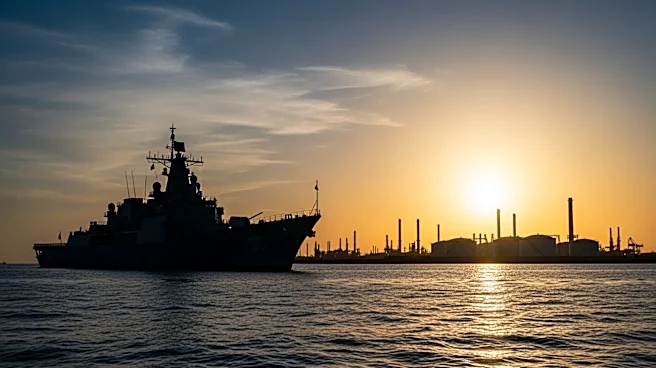
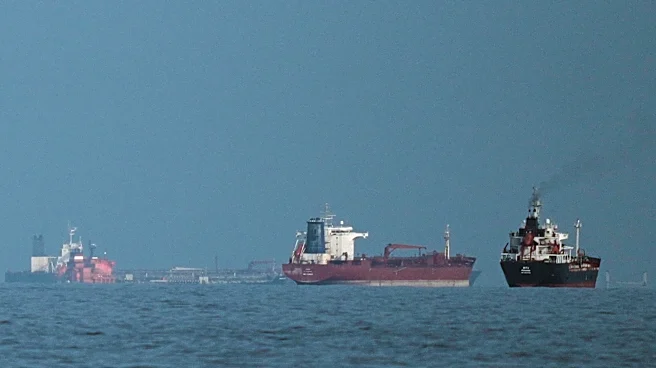
Oil prices have surged following the U.S. military's announcement of a blockade on Iranian ports. This move comes after peace talks between the U.S. and Iran collapsed over the weekend. The blockade is expected to impact global oil shipping, particularly
through the Strait of Hormuz, a crucial waterway for oil exports. The price of U.S. crude oil has risen by 8% to $104.24 per barrel, while Brent crude oil has increased by 7% to $102.29. The blockade will be enforced impartially against vessels of all nations entering or departing Iranian ports.
Why It's Important?
The U.S. military's blockade of Iranian ports is a significant geopolitical event with implications for global oil markets. The Strait of Hormuz is a vital passage for oil exports, and any disruption can lead to volatility in oil prices. Rising oil prices can have economic consequences, increasing costs for consumers and businesses worldwide. Countries reliant on oil imports may face economic challenges, while oil-exporting nations could benefit from higher prices. This situation underscores the impact of geopolitical tensions on global energy markets.
What's Next?
The blockade is likely to lead to further diplomatic tensions between the U.S. and Iran, with potential repercussions for international relations in the Middle East. Oil prices may continue to fluctuate as the situation develops, affecting global markets. Stakeholders, including governments and oil companies, will be closely monitoring the situation to assess its impact on energy supplies and prices. The U.S. may face pressure from allies and international organizations to resolve the situation and stabilize oil markets.