



What's Happening?
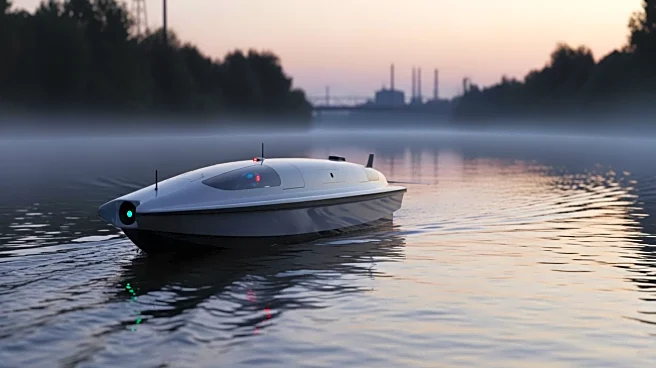
Ukraine has expanded its use of unmanned surface vehicles (USVs) to target Russian positions along the Dnipro River. The Barracuda USV, developed by Ukraine's 40th Coastal Defense Brigade, has been deployed in missions against Russian boats and outposts.
A recent video released by the brigade shows the Barracuda successfully navigating an inlet and striking a camouflaged Russian boat, followed by aerial footage of the resulting explosion. This development is part of Ukraine's broader strategy to utilize USVs in its military operations, which have previously targeted Russian shipping and infrastructure. The Barracuda is designed for short-distance missions and is guided by artificial intelligence, although it lacks satellite communication capabilities.
Why It's Important?
The deployment of Barracuda USVs represents a significant advancement in Ukraine's military capabilities, particularly in riverine warfare. By leveraging these drone boats, Ukraine can effectively target Russian positions in challenging environments, potentially altering the dynamics of the conflict. The use of USVs allows Ukraine to conduct operations with reduced risk to personnel and can serve as a deterrent against Russian advances. This innovation in military technology underscores the importance of unmanned systems in modern warfare, offering strategic advantages in terms of cost, flexibility, and operational reach.
What's Next?
Ukraine's continued use of Barracuda USVs may prompt Russia to enhance its own unmanned surface vehicle capabilities. As both nations develop these technologies, the conflict could see increased reliance on drone warfare, particularly in contested riverine and coastal areas. The effectiveness of these operations may influence future military strategies and could lead to further innovations in unmanned systems. Additionally, Ukraine's success with USVs might encourage other countries to explore similar technologies for their defense needs.
Beyond the Headlines
The ethical implications of using unmanned systems in warfare are significant, as they raise questions about accountability and the potential for unintended consequences. The reliance on artificial intelligence for navigation and targeting introduces challenges in ensuring precision and minimizing collateral damage. Furthermore, the development and deployment of such technologies could lead to an arms race in unmanned systems, with countries investing heavily in these capabilities to gain a strategic edge.