






What's Happening?
The Municipal Administration and Water Supply (MAWS) Department in Tamil Nadu has released new guidelines to streamline and coordinate the activities of various agencies involved in rainwater harvesting (RWH). The objective is to maximize the benefits
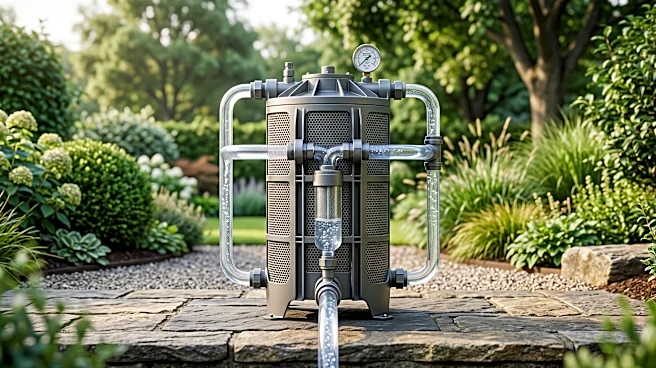
of RWH initiatives and promote teamwork among different departments. These guidelines cover RWH implementation in houses, apartments, industries, parks, and public spaces, detailing specific techniques for direct collection and groundwater recharge based on soil types. For instance, filtered rooftop runoff is recommended for desilted open wells and abandoned borewells, while percolation pits and shallow recharge wells are suggested for sandy and red soil areas. For clay soil, percolation pits with bores or recharge trenches with bores are specified to bypass low permeability. The MAWS department will serve as the nodal agency for coordinating RWH activities, with state and district-level committees established for guidance, monitoring, and review.
Why It's Important?
The issuance of comprehensive guidelines by the Tamil Nadu government signifies a concerted effort to address water scarcity and improve water resource management. By coordinating the activities of various agencies, the government aims to overcome previous challenges related to inconsistent implementation and lack of awareness, ensuring a more standardized and effective approach to RWH. This initiative is crucial for enhancing groundwater recharge, which is vital for sustainable water supply, especially in urban areas. The detailed technical specifications for different soil types ensure that RWH structures are optimally designed and implemented, leading to greater efficiency in water conservation. This systematic approach can serve as a model for other regions facing similar water management issues.
What's Next?
Following the new guidelines, the Tamil Nadu government is focusing on building new RWH structures and rejuvenating existing ones as part of a statewide awareness campaign launched by Chief Minister C. Joseph Vijay. Instructions have been issued to district collectors and municipal commissioners to encourage widespread adoption across urban areas. An expert committee comprising officials from the Chennai Metropolitan Water Supply and Sewerage Board (CMWSSB), Tamil Nadu Water Supply and Drainage Board (TWAD Board), and the Directorate of Municipal Administration has developed technical proposals for implementation. The MAWS department will continue to act as the central coordinating body, with state and district-level committees actively guiding and monitoring the progress of RWH initiatives.
Beyond the Headlines
The emphasis on standardized design models and coordination among agencies reflects a shift towards a more integrated and scientific approach to water management. This move not only addresses the immediate need for water conservation but also aims to build long-term resilience against climate change impacts, such as erratic rainfall patterns. The guidelines' specificity regarding soil types highlights an understanding of local ecological conditions, ensuring that RWH solutions are tailored and effective. This initiative could foster a culture of water conservation among citizens and industries, leading to broader environmental benefits and a more sustainable urban and rural landscape. The government's proactive role in promoting RWH as a mass movement could inspire community-led water management efforts.