
What's Happening?
In the mid-nineteenth century, evidence emerged that challenged the myth of American Indians as 'Stone-Age' peoples without metalworking technology. Explorers and settlers in the Great Lakes region discovered
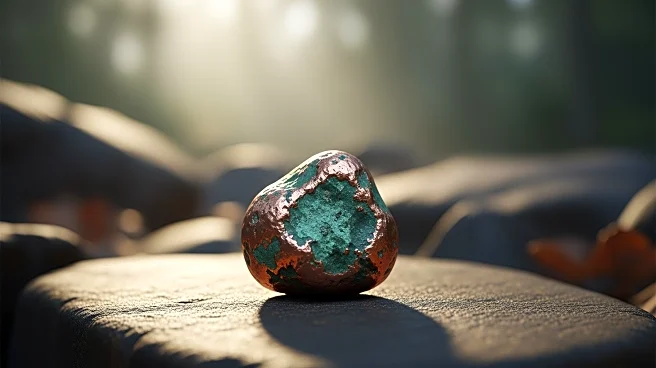
ancient copper mines, indicating that Indigenous peoples had been mining copper long before European contact. Reports from Michigan in 1847 and Minnesota in 1848 detailed findings of copper artifacts and mining tools, such as stone hammers and copper chisels, suggesting sophisticated mining operations. These discoveries debunked earlier theories that attributed the copper artifacts to European or other ancient civilizations. The evidence pointed to a rich history of Indigenous copper mining, with pits and tools found at various sites, including Isle Royale.
Why It's Important?
The discovery of Indigenous copper mining operations in the Great Lakes region is significant as it challenges long-held misconceptions about the technological capabilities of Native American societies. It highlights the advanced skills and knowledge of Indigenous peoples in metallurgy and mining, which were previously underestimated or ignored. This revelation has implications for understanding the history and contributions of Native American cultures to the development of North America. It also prompts a reevaluation of historical narratives that have marginalized Indigenous achievements and reinforces the importance of recognizing and preserving Indigenous heritage and history.