








What's Happening?
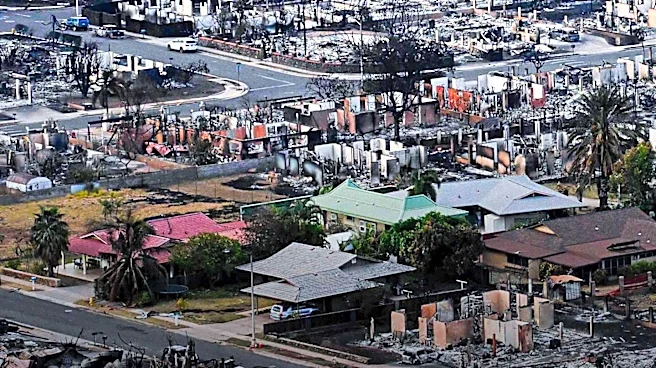
Hawaii has launched an Emergency Farmer Relief (EFR) grant program to assist farmers and ranchers impacted by three significant storms: Lala, Lowell, and Moke. These storms severely affected the Hawaiian Islands from mid-August through the first week
of September, causing widespread damage to homes, roads, and agricultural lands. Governor Josh Green announced that the program, a collaboration between the Governor’s Office, the Department of Agriculture and Biosecurity (DAB), and the Department of Accounting and General Services, will provide up to $1,500 in relief funding per eligible applicant. The online application portal will open on November 2 and accept submissions until January 29, 2027. Sharon Hurd, chair of the Board of Agriculture and Biosecurity, emphasized the importance of quickly getting relief money to the agricultural community, drawing parallels to the assistance provided after earlier Kona low storms.
Why It's Important?
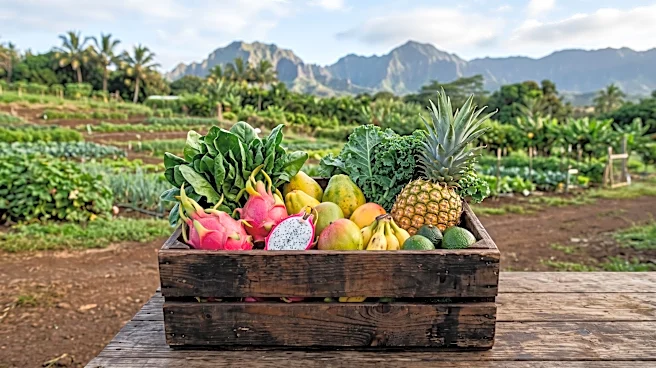
This initiative is crucial for the U.S. state of Hawaii, where agriculture plays a vital role in the local economy and food security. The severe damage inflicted by the storms threatens the livelihoods of farmers and ranchers, potentially leading to disruptions in the food supply chain and increased reliance on imported goods. The EFR program aims to help these agricultural businesses repair infrastructure, replace damaged equipment, and resume operations, thereby safeguarding local food production and economic stability. For U.S. taxpayers, this represents a direct investment in disaster recovery and agricultural resilience. The program also highlights the increasing vulnerability of agricultural sectors to extreme weather events, a growing concern across the nation due to climate change. The quick implementation of such relief efforts is essential for preventing long-term economic hardship in affected communities.
What's Next?
Starting November 2, eligible farmers and ranchers in Hawaii can begin applying for the EFR grants through the online portal. The DAB will process applications on a first-come, first-served basis, as the program has limited funds. Applicants will need to submit a W-9, Schedule C, or Schedule F from their tax returns as proof of their agricultural work. The DAB anticipates that funding checks will be available for pickup starting early to mid-January at various locations across the state. The success of this program will be closely monitored, and its effectiveness in aiding recovery efforts will likely inform future disaster relief strategies for the agricultural sector in Hawaii and potentially other U.S. states facing similar challenges. There may also be ongoing efforts to assess the long-term impacts of these storms on Hawaii's agricultural landscape.
Beyond the Headlines
The implementation of the Emergency Farmer Relief grants in Hawaii underscores a broader national challenge: adapting to and mitigating the impacts of climate change on critical sectors like agriculture. This program reflects a growing recognition that natural disasters are becoming more frequent and intense, necessitating robust and agile governmental responses. Beyond the immediate financial aid, this initiative could foster greater community resilience and encourage sustainable farming practices that are more resistant to extreme weather. Ethically, it highlights the responsibility of government to protect its citizens' livelihoods, especially those in essential industries. Culturally, it reinforces the value placed on local food production and the unique agricultural heritage of Hawaii. The long-term implications could include policy shifts towards proactive climate adaptation measures, enhanced disaster preparedness, and increased investment in resilient agricultural infrastructure across the U.S.