



What's Happening?
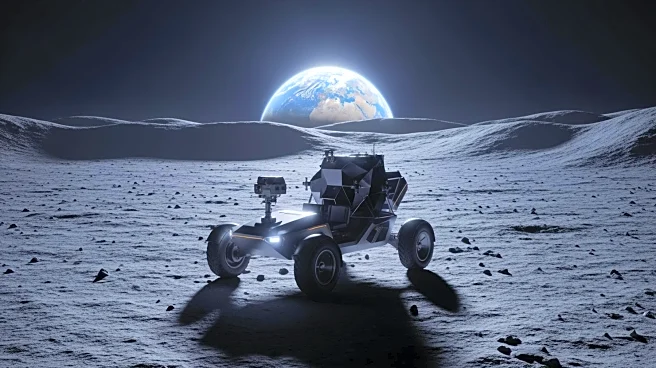
Scientists have identified a large cavity in space between Earth and the Moon, which is devoid of galactic cosmic rays (GCRs). This discovery was made using data from China's Chang'e-4 mission, the first spacecraft to land on the Moon's far side. The
cavity is created by Earth's magnetic field, which deflects these high-energy particles. Galactic cosmic rays are known to pose significant health risks to astronauts, making this cavity a potential protective zone for future space missions. The presence of this cavity challenges previous assumptions that GCRs are uniformly distributed in space. Researchers suggest that this natural shield could be strategically used in planning future space missions to minimize radiation exposure for astronauts.
Why It's Important?
The discovery of this galactic cavity has significant implications for the future of space exploration. As space agencies like NASA plan longer missions, including potential manned missions to Mars, understanding and mitigating the risks posed by cosmic radiation becomes crucial. This cavity could serve as a natural protective zone, reducing the need for artificial shielding and potentially lowering mission costs. Additionally, the findings could influence the timing and trajectory of space missions to take advantage of this natural protection. This discovery also contributes to our understanding of space weather and its interactions with Earth's magnetic field, which is vital for the safety and success of future space endeavors.