






What's Happening?
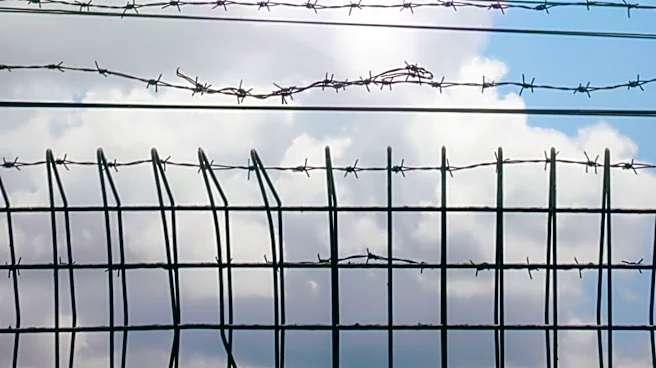
Finland has completed a 200-kilometer security fence along its border with Russia, a project initiated after Russia's full-scale invasion of Ukraine in 2022 prompted Finland to join NATO in April 2023. The 4.5-meter-high barrier, equipped with cameras
and sensors, covers sections of Finland's 1,340-kilometer frontier, primarily in the southeast. This development comes as Helsinki proposes extending its Border Security Act until the end of 2028, allowing the country to restrict asylum applications in limited border areas under exceptional circumstances where national security is threatened. The legislation has drawn controversy, with legal experts raising concerns about potential breaches of international human rights obligations and EU law. Finnish Interior Minister Mari Rantanen emphasized the need for preparedness, stating that the situation, though currently calm, could change rapidly. The fence cost €356 million, with annual maintenance estimated at €2-3 million, and is considered crucial for surveillance and preventing unauthorized entry, despite advancements in drone technology.
Why It's Important?
The completion of Finland's border fence and the extension of its Border Security Act signify a significant hardening of NATO's eastern flank, directly impacting regional security dynamics. This move reflects heightened concerns over Russia's actions, particularly after Finland accused Moscow of 'hybrid warfare' in late 2023, involving the orchestration of migrants towards its border. The fence serves as a physical deterrent and a symbol of Finland's commitment to its new NATO role, reinforcing the alliance's longest border with Russia. The controversial Border Security Act, while aimed at national security, highlights the delicate balance between state sovereignty and international human rights, potentially setting a precedent for other EU and NATO member states facing similar pressures. The financial investment in border infrastructure also underscores the economic burden and strategic shift required to counter perceived threats, potentially influencing future EU funding allocations for border security in eastern member states.
What's Next?
Finland's proposed extension of its Border Security Act until 2028 will likely undergo further scrutiny and debate, particularly regarding its compliance with international human rights and EU law. The European Union may face increased pressure to provide financial support for border security projects in its eastern member states, as advocated by Finnish Interior Minister Mari Rantanen. The effectiveness of the fence in deterring hybrid attacks and managing migration flows will be closely monitored, potentially influencing similar border fortification efforts across NATO and the EU's eastern flank. Russia's reaction to these strengthened border measures will also be a key factor to observe, as will any shifts in its alleged 'hybrid warfare' tactics. The long-term implications for regional stability and the future of asylum policies in the EU remain to be seen.
Beyond the Headlines
The construction of Finland's border fence and the accompanying legal measures reflect a broader geopolitical shift, where physical barriers are re-emerging as critical components of national security in Europe. This development challenges the traditional open-border ethos within the EU and raises profound questions about the future of international cooperation, migration policies, and human rights in an era of heightened geopolitical tension. The 'hybrid warfare' accusations against Russia highlight the evolving nature of conflict, extending beyond conventional military engagements to include tactics like weaponized migration. This necessitates a re-evaluation of defense strategies and international legal frameworks to address such non-traditional threats. The controversy surrounding the Border Security Act also underscores the ethical dilemma faced by democratic nations in balancing security imperatives with fundamental human rights, potentially leading to a redefinition of asylum procedures and border management in the face of perceived national emergencies.