



What's Happening?
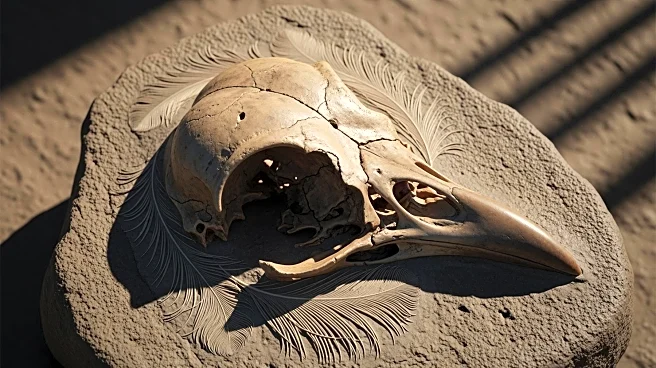
In 2022, a significant discovery was made at the Field Museum in Chicago involving a mysterious Archaeopteryx fossil. This fossil, which took over a year to prepare, revealed a previously unseen feature in the fossil record. Using advanced techniques
such as ultraviolet light, paleontologists uncovered oral papillae inside the skull of the Archaeopteryx. These fleshy cones, found in modern birds, help guide food to the back of the throat, suggesting that even early bird-like dinosaurs had specialized digestive systems. This discovery marks the oldest known oral papillae in the fossil record, pushing back the existence of this feature far earlier than previously believed.
Why It's Important?
The discovery of oral papillae in Archaeopteryx provides critical insight into the evolution of feeding systems in early birds. As birds evolved from dinosaurs, their bodies needed to adapt to the high-energy demands of flight. The presence of oral papillae suggests that early avians were already developing efficient digestive systems to support powered flight. This find enhances our understanding of how these creatures adapted to their environments and the evolutionary path from dinosaurs to modern birds. The use of UV technology in fossil preparation has revolutionized the field, allowing scientists to uncover intricate details without damaging the fossils.