



What's Happening?
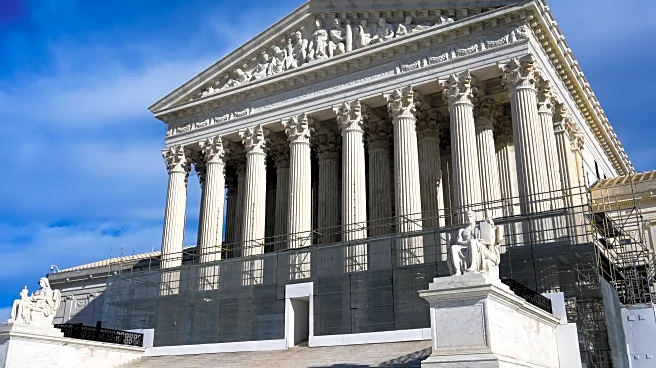
A federal court has rejected the Trump administration's attempt to delay the refund process for tariffs deemed illegal by the Supreme Court. The U.S. Court of Appeals for the Federal Circuit has sent the case to a lower court to determine how refunds
should be processed. The Supreme Court had previously ruled that President Trump's tariffs were illegal, allowing importers to seek refunds. The government collected over $130 billion from these tariffs, with potential refunds totaling $175 billion. The court's decision marks a significant step in resolving the complex refund process, which lacks clear guidance from the Supreme Court.
Why It's Important?
The court's decision is crucial for businesses seeking refunds for tariffs they paid under the now-invalidated policy. The potential $175 billion in refunds represents a significant financial impact on both the government and businesses. The decision also underscores the legal and procedural challenges in reversing tariff policies and highlights the importance of judicial oversight in trade matters. The outcome of this case could set precedents for future trade policy disputes and influence the administration's approach to tariff implementation.
What's Next?
The U.S. Court of International Trade will now handle the refund process, which could involve complex legal and financial considerations. Businesses affected by the tariffs will need to navigate the legal system to secure refunds, potentially leading to prolonged litigation. The administration may also explore new tariff strategies to offset the financial impact of the refunds. Stakeholders, including businesses and policymakers, will closely monitor the proceedings to understand the broader implications for trade policy and economic strategy.