





What's Happening?
The Energy and Resources Institute (TERI) has showcased its biomass gasifier technology as a cost-effective alternative for large-scale cooking, amid rising LPG costs and supply disruptions. Originally developed in 1995, the biomass gasifier converts
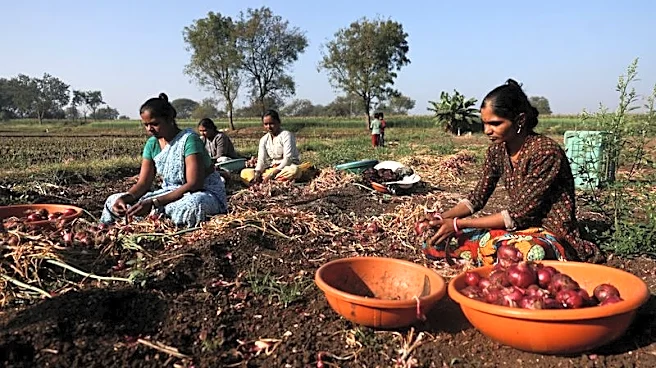
agricultural residues and wood chips into clean combustible gas through thermo-chemical processes. The upgraded system is now being used for institutional and community cooking applications, reducing reliance on fossil fuels like LPG. A live demonstration at TERI Retreat campus shows the system's capacity to prepare meals for nearly 300 people daily, highlighting its potential for consistent, scalable, and affordable energy solutions. TERI has implemented these systems across various sectors in India, achieving significant fuel cost savings and reduced carbon emissions.
Why It's Important?
The demonstration of TERI's biomass gasifier technology is significant as it offers a sustainable solution to the challenges posed by global LPG supply disruptions. By utilizing locally available agricultural residues, the technology reduces dependence on imported fuels, lowers cooking costs, and provides cleaner combustion compared to traditional biomass. This approach supports India's energy diversification efforts and aligns with global sustainability goals. The technology's potential for large-scale adoption could benefit International Solar Alliance member countries seeking sustainable energy options for community kitchens and rural institutions, promoting a circular economy and advancing environmental conservation.
What's Next?
TERI's biomass gasifier technology is poised for broader adoption, with potential applications in various sectors beyond community cooking. The institute invites media to explore the technology's potential as an alternative to LPG in institutional cooking settings. Stakeholders, including government agencies and international organizations, may consider integrating this technology into their energy strategies to enhance energy security and sustainability. Further research and development could lead to improved efficiency and scalability, making biomass gasification a viable option for more regions facing energy challenges.