




What's Happening?
The City of Tuscaloosa is pursuing nearly $2.6 million in federal funding to enhance pedestrian safety downtown by installing security bollards. The Tuscaloosa City Council Finance Committee is scheduled to consider authorizing an application for the
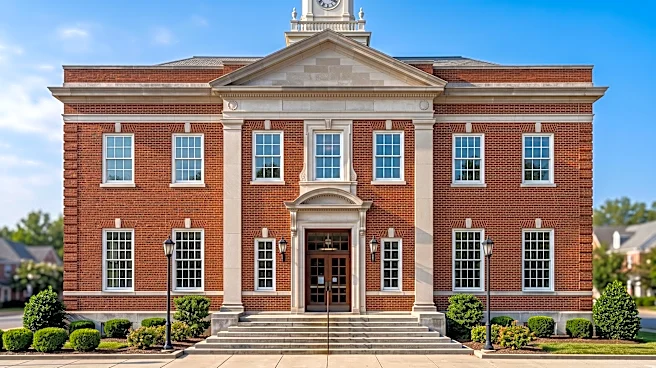
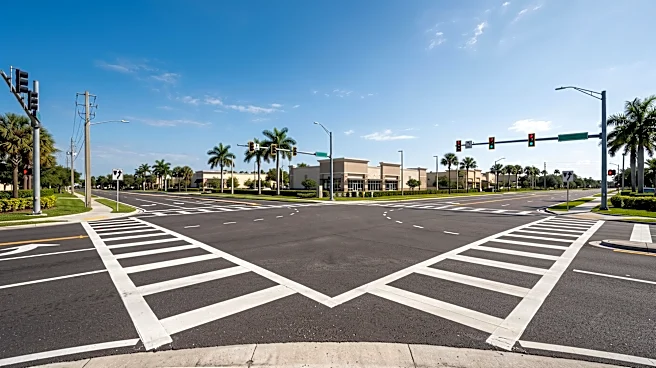
U.S. Department of Transportation's FY2026 Stopping Threats on Pedestrians Competitive Grant Program. The city is requesting $2,577,649, with no local matching funds required. Preliminary engineering plans, described as not yet for construction, outline the installation of these bollards around Government Plaza and at multiple intersections along University Boulevard, including 20th, 21st, 22nd, and 23rd Avenues, and 23rd Avenue at 4th Street. These barriers are intended to protect pedestrians from vehicle threats in crowded areas, though city documents do not specify a particular incident or threat prompting the application.
Why It's Important?
This initiative reflects a growing national trend among U.S. cities to bolster security in public spaces, particularly in areas with high pedestrian traffic. The increasing frequency of vehicle-ramming attacks and other vehicle-related threats has prompted municipalities to re-evaluate and upgrade their protective infrastructure. For Tuscaloosa, securing this federal grant would allow for significant safety improvements without burdening local taxpayers, addressing a critical public safety concern. The installation of bollards aims to create safer environments for residents and visitors, especially during community events held at Government Plaza and along the bustling University Boulevard. This proactive measure could enhance public confidence in downtown areas, potentially supporting local businesses and tourism by making these spaces feel more secure. It also highlights the federal government's role in supporting local safety initiatives through targeted grant programs.
What's Next?
The Tuscaloosa City Council Finance Committee will discuss and potentially authorize the application for the federal grant. If approved, the city will submit its request to the U.S. Department of Transportation. The success of the application will determine whether the project moves forward. Should the funding be secured, the city will then proceed with detailed planning, procurement, and eventual installation of the security bollards. Key details, such as the number of bollards, whether they will be fixed or removable, and their impact resistance, will need to be finalized. These decisions will also consider how the new barriers will integrate with existing traffic flow, parking, deliveries, and special events in the downtown area. The project's progression will be closely watched by residents and businesses, as it will alter the physical landscape and functionality of key downtown locations.
Beyond the Headlines
The move to install security bollards in Tuscaloosa speaks to a broader societal shift in how public spaces are designed and secured in the face of evolving threats. While enhancing safety, such measures also subtly transform urban environments, potentially creating a more fortified aesthetic. This raises questions about the balance between security and accessibility, and how physical barriers might impact the perceived openness and vibrancy of public areas. The lack of a specified threat in Tuscaloosa's documents suggests a proactive, rather than reactive, approach to urban security, reflecting a national awareness of potential vulnerabilities. This trend could lead to more widespread adoption of similar protective infrastructure in cities across the U.S., influencing urban planning and design for decades to come. It also underscores the ongoing challenge for cities to adapt to new security paradigms while maintaining their character and functionality.