






What's Happening?
A recent study conducted by the Daugherty Water for Food Global Institute at the University of Nebraska provides a comprehensive assessment of the current state and future prospects of irrigated agriculture in the United States. Published in Agricultural
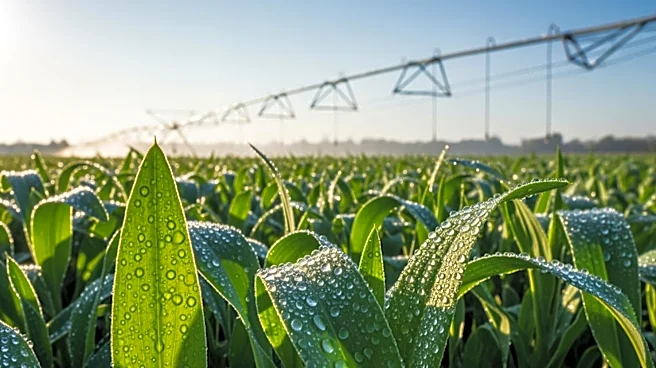
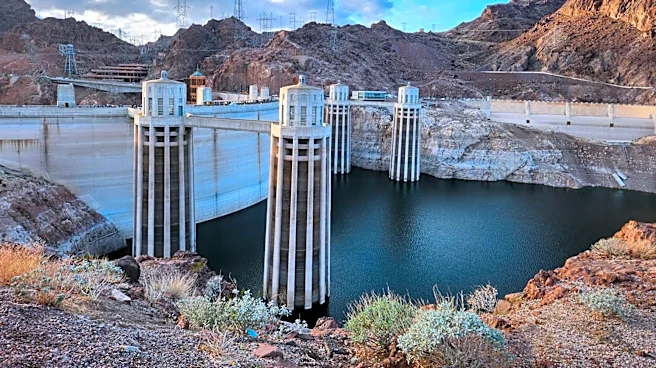
Water Management, the study emphasizes the critical role of effective water governance and technological investment in sustaining U.S. agriculture. The research highlights that five states—California, Nebraska, Arkansas, Texas, and Idaho—account for about half of the nation's irrigated farmland. The study notes a gradual shift of irrigated agriculture towards eastern states due to groundwater depletion in the Great Plains and West. It also observes changes in crop patterns, with increased irrigation for corn and soybeans and a decline for alfalfa, cotton, and rice. The study calls for stronger groundwater monitoring, broader adoption of precision irrigation practices, and expanded access to irrigation technologies, especially for smaller producers.
Why It's Important?
The findings of this study are significant as they address the sustainability challenges facing U.S. agriculture, a critical sector for national food security and economic stability. The shift in irrigated agriculture towards the east could have profound implications for regional water infrastructure and agricultural policies. The study underscores the need for improved water governance to manage resources effectively amid climate variability and rising operational costs. By advocating for precision irrigation and technological advancements, the study highlights pathways to enhance water use efficiency, which is crucial for maintaining agricultural productivity in the face of environmental and economic pressures. The recommendations could influence policy decisions and investment priorities, impacting farmers, rural communities, and the broader agricultural industry.
What's Next?
The study suggests that addressing the challenges of groundwater depletion and fragmented water rights systems will require coordinated policy efforts and investment in water management technologies. Stakeholders, including policymakers, agricultural producers, and technology providers, may need to collaborate to implement the study's recommendations. The potential eastward shift in irrigated agriculture could prompt changes in land use and water infrastructure development in regions not traditionally associated with large-scale irrigation. As the U.S. seeks to maintain its role as a global food security anchor, the adoption of advanced irrigation practices and effective governance frameworks will be critical in ensuring the long-term viability of its agricultural sector.