








What's Happening?
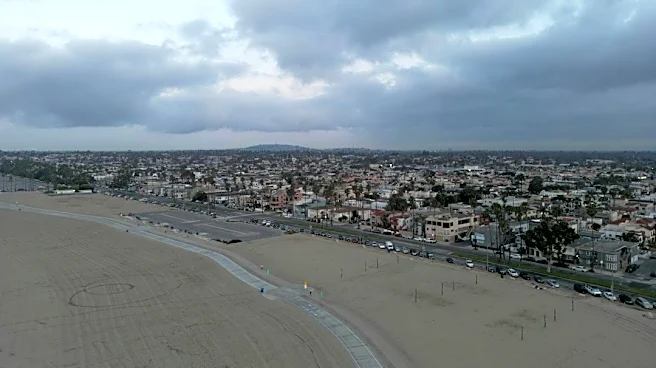
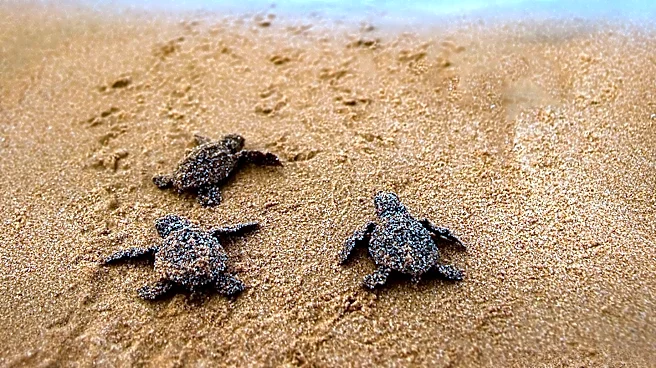
Eggs from two nests of endangered olive ridley sea turtles, discovered on Orange County beaches in Seal Beach and Huntington Beach, have been moved to the Aquarium of the Pacific in Long Beach. This marks the first documented natural sea turtle nesting
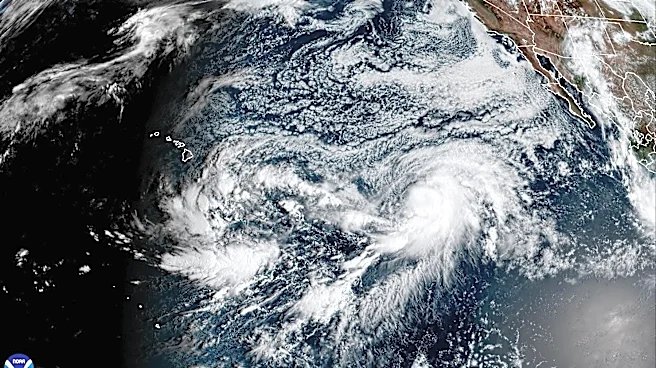
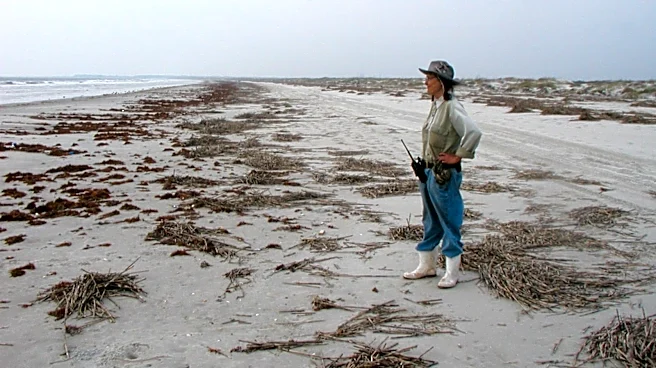
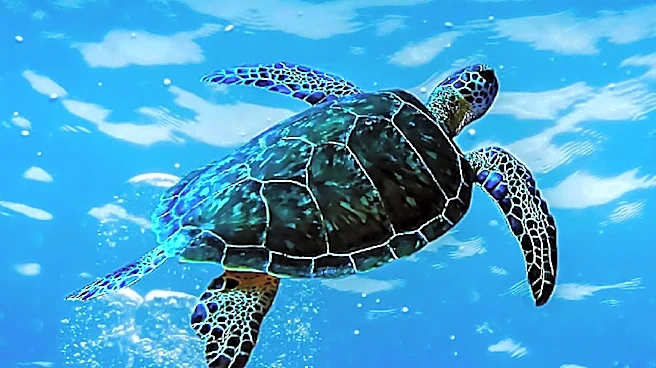
on the West Coast. Biologists collected 204 eggs on Friday and transferred them to a temperature-controlled environment at the aquarium for incubation. The decision to move the eggs was prompted by concerns that high surf and tides, potentially exacerbated by Hurricane Polo, could wash away the nests. Jeffrey Seminoff of National Oceanic and Atmospheric Administration Fisheries described the discovery as unexpected, noting that two individuals crawled ashore within eight kilometers of each other in Orange County. Olive ridley sea turtles are the smallest sea turtles, with adults weighing up to 100 pounds and growing between 2 and 3 feet in length.
Why It's Important?
This event is significant as it represents the first documented natural nesting of olive ridley sea turtles on the U.S. West Coast, indicating a potential shift in marine wildlife patterns. The relocation of the eggs to the Aquarium of the Pacific highlights critical conservation efforts to protect endangered species from environmental threats like severe weather. The successful incubation and hatching of these eggs could contribute to the population recovery of olive ridley sea turtles, a species facing numerous challenges including habitat loss and climate change. The unexpected nesting activity also suggests possible ecological changes, such as warmer El Niño waters, which may be influencing the migration and breeding behaviors of these turtles. This could lead to increased awareness and research into how climate patterns affect marine biodiversity along the Pacific coast.
What's Next?
If the transferred eggs are viable, they are expected to hatch in 45-60 days, around the first week of November. Aquarium officials will monitor the incubation process closely to ensure the best possible conditions for the hatchlings. Researchers anticipate the possibility of more nesting activity in the future, as olive ridley sea turtles often nest multiple times during a single season, and the warm El Niño waters that likely drew them north are still present. The National Oceanic and Atmospheric Administration (NOAA) encourages the public to report any stranded turtles to their West Coast Stranding Hotline and sea turtle sightings via their Facebook account, which will aid in ongoing monitoring and conservation efforts.
Beyond the Headlines
The unprecedented nesting of olive ridley sea turtles on the West Coast raises deeper questions about the long-term impacts of climate change and ocean warming on marine ecosystems. This event could be an early indicator of significant shifts in species distribution and breeding grounds, potentially leading to new conservation challenges and opportunities. It also underscores the importance of rapid response and collaboration between scientific institutions and local authorities in protecting vulnerable wildlife. The successful intervention by the Aquarium of the Pacific sets a precedent for future conservation strategies in response to unexpected ecological events, emphasizing the ethical responsibility to safeguard endangered species against human-induced environmental changes and natural disasters.