






What's Happening?
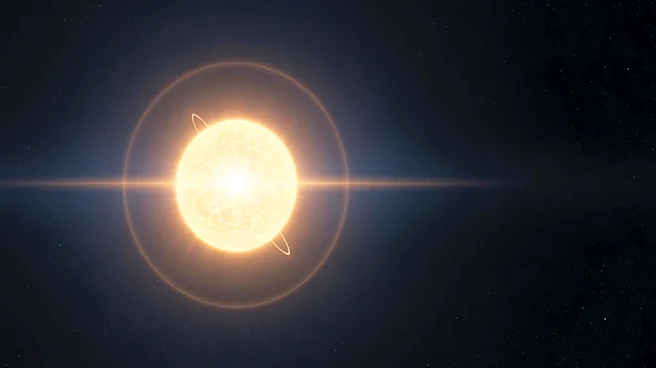
A team of researchers from Tufts University has discovered that sympathetic flares, a solar phenomenon previously observed only on the Sun, are common among distant stars. This finding, published in The Astrophysical Journal, marks a significant advancement
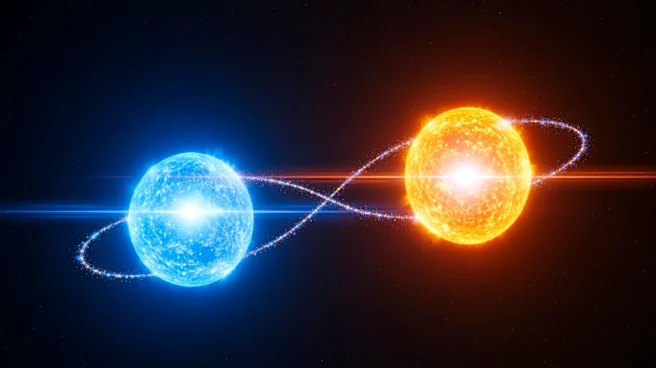
in the understanding of stellar phenomena. Sympathetic flares occur when a secondary flare is triggered by an initial eruption, creating a ripple effect. The study revealed that this phenomenon is not exclusive to the Sun but is present in over 16,000 stars, including Sun-like giants and M dwarfs, the most common stars in the Milky Way. The research team developed a novel algorithm, TOFFEE, to analyze over 200,000 flares across these stars, distinguishing between unrelated flares and those triggered by a prior flare.
Why It's Important?
The discovery of sympathetic flares on distant stars has significant implications for the field of astronomy. It suggests a universal mechanism at work across the galaxy, challenging previous assumptions that such phenomena were rare and confined to our solar system. This breakthrough enhances the understanding of stellar behavior and could lead to new insights into the life cycles of stars. The findings also highlight the potential for further research into the mechanisms driving these flares, which could have broader implications for the study of stellar and solar physics.