








What's Happening?
The White House has introduced a new strategy aimed at diversifying the allocation of federal research funding, traditionally dominated by universities. The report, titled 'Science: A New Golden Age,' suggests that federal agencies should support individual
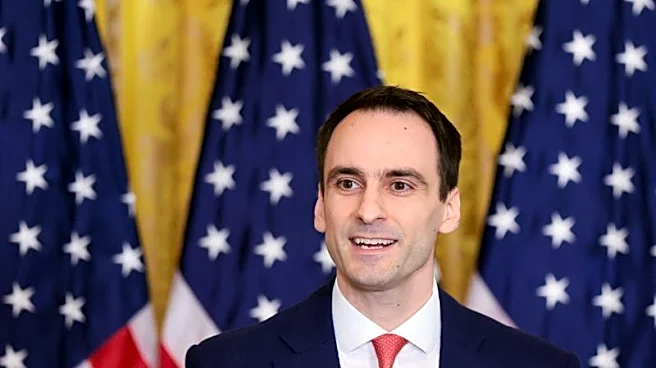
researchers who can choose their institutions, potentially outside academia. This approach is intended to address complex scientific challenges that require interdisciplinary collaboration. The report, authored by Michael Kratsios, emphasizes the need for large, multi-disciplinary teams to tackle these issues. While the report does not mandate specific funding shifts, it encourages the exploration of alternative funding models, including multiyear grants, which have sparked debate over their impact on early-career researchers.
Why It's Important?
This initiative could significantly alter the landscape of scientific research in the U.S. by reducing the traditional reliance on university-based research. By promoting funding outside academia, the White House aims to revive private research labs and encourage high-risk, high-reward projects that may not fit within the conventional academic framework. This shift could lead to more diverse research environments and potentially faster innovation. However, it also raises concerns about the future of university research funding and the potential for reduced support for established academic research programs. The proposal reflects a broader administrative effort to reshape the scientific enterprise, which could have long-term implications for how research is conducted and funded in the U.S.
What's Next?
The implementation of this vision remains uncertain, as it depends on how federal agencies interpret and apply the guidance. The proposal may face resistance from academic institutions concerned about losing funding. Additionally, the effectiveness of this approach in fostering innovation will be closely monitored. Stakeholders, including universities and private research entities, will likely engage in discussions to influence the final outcome. The administration's broader policy changes, including proposed adjustments to federal grant regulations, suggest a continued push for reform in the scientific funding landscape.