






What's Happening?
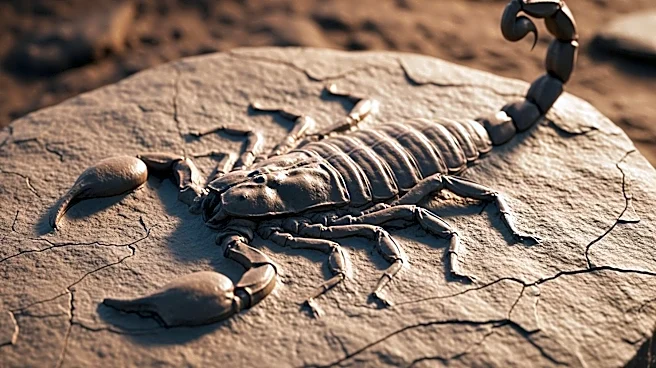
Researchers from the University of Manchester have identified the world's largest scorpion, Praearcturus gigas, which lived approximately 415 million years ago during the Devonian period. The discovery was made from fossil fragments that had been stored
in the museum's collection for over 150 years. These fragments, originally found in England and Wales, were initially misidentified due to their incomplete nature. However, modern imaging and analytical techniques allowed paleontologists to piece together the remains and confirm the scorpion's identity. The Praearcturus gigas, measuring 3.3 feet in length with pincers 6.2 inches long, is now recognized as a significant prehistoric predator. The scorpion's size is attributed to the lack of competition during its time, as it lived in an era before the evolution of trees and large terrestrial animals.
Why It's Important?
The identification of Praearcturus gigas provides valuable insights into the evolutionary history of arthropods and the ecological dynamics of the Devonian period. This discovery highlights the adaptability and evolutionary experimentation of early life forms as they transitioned from aquatic to terrestrial environments. The scorpion's size and predatory nature underscore the ecological niches that existed before the rise of more complex ecosystems. Understanding these ancient life forms can inform current studies on biodiversity and evolutionary biology, offering a glimpse into how life on Earth has adapted to changing environments over millions of years.
What's Next?
Further research is likely to focus on the ecological role of Praearcturus gigas and its interactions with other species of its time. Scientists may also explore the environmental conditions that allowed such large arthropods to thrive. This could involve detailed studies of the Devonian period's climate and geography. Additionally, the discovery may prompt a re-examination of other fossil collections to identify potential misclassifications and uncover more about prehistoric life.
Beyond the Headlines
The discovery of Praearcturus gigas challenges previous assumptions about the size limitations of early arthropods and their ecological roles. It also raises questions about the evolutionary pressures that led to the development of such large predators in a relatively simple ecosystem. This finding may influence how scientists interpret the fossil record and understand the evolutionary pathways of arthropods, potentially leading to new theories about the diversification of life on Earth.