





What's Happening?
The Chicago Park District has installed a solar-powered mobile security trailer equipped with surveillance cameras at Ronan Park. This deployment follows ongoing concerns from neighbors and numerous emergency service calls, including a recent fire at the
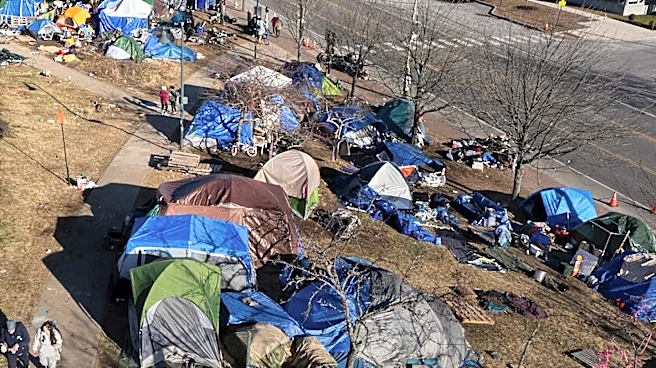
park's homeless encampment. The unit, manufactured by LVT (LiveView Technologies), features bright lights, floodlights, and speakers capable of delivering 'talk down' messages. According to Ald. Rossana Rodríguez Sánchez (33rd), the cameras were installed at the Park District's discretion due to reports of fires and increased community safety risks. The footage is accessible only to Park District security and not to local police or federal immigration authorities without a warrant. The encampment, home to approximately 20 individuals, has been a subject of debate, with its size increasing after a nearby encampment at Legion Park was shut down due to fires and conflicts.
Why It's Important?
The deployment of mobile surveillance cameras in a public park to monitor a homeless encampment raises significant questions about privacy, public safety, and the management of urban homelessness. For residents of the encampment, the constant surveillance is described by some as intrusive, akin to 'having a stalker,' and potentially leading to paranoia. Conversely, some neighbors and community members view the cameras as a necessary measure to deter crime and address safety concerns, citing numerous police dispatches for incidents ranging from drug sales to assaults. This situation highlights the tension between the right to privacy, particularly for vulnerable populations, and the perceived need for increased security in public spaces. The Park District's decision reflects a growing trend of utilizing advanced surveillance technology to manage social issues, which could set a precedent for how similar situations are handled in other U.S. cities.
What's Next?
The Chicago Park District will continue to monitor the Ronan Park encampment using the newly installed mobile surveillance cameras. Ald. Rossana Rodríguez Sánchez's office is collaborating with city agencies on cleanup efforts and crisis stabilization following the recent fire, and is working on a long-term strategy to reduce fire risks, including reminding residents about prohibited items like propane tanks. Her office is also increasing its presence at the park to connect residents with mental health resources, housing assistance, employment, and healthcare needs. The effectiveness of the cameras in deterring incidents and improving safety will likely be evaluated, potentially influencing future decisions regarding surveillance in other public parks with similar encampments. The ongoing debate between encampment residents, neighbors, and city officials regarding privacy and safety is expected to continue as the situation evolves.
Beyond the Headlines
This situation delves into the complex ethical and societal implications of surveillance technology in public spaces, particularly when applied to marginalized communities. While proponents argue for enhanced safety and crime deterrence, critics raise concerns about the potential for increased criminalization of homelessness and the erosion of privacy rights. The use of 'talk down' messages from the surveillance units, for instance, could be seen as a form of dehumanizing control rather than genuine assistance. Furthermore, the incident underscores the broader challenge of addressing homelessness in urban environments, where solutions often involve balancing the needs and rights of various stakeholders. The reliance on surveillance rather than comprehensive social services could indicate a systemic failure to adequately support vulnerable populations, potentially leading to a cycle of displacement and further marginalization rather than sustainable solutions.