






What's Happening?
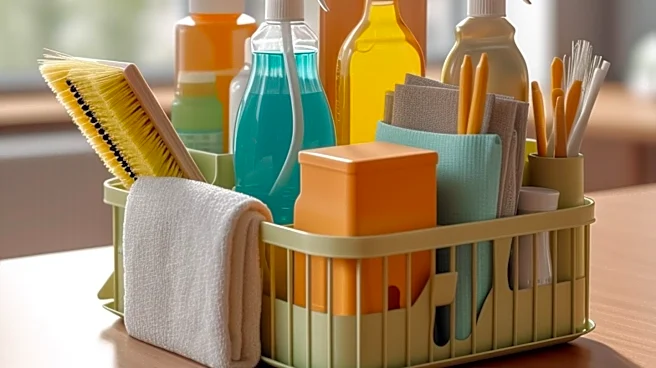
New research from Purdue University, to be presented at the American Chemical Society’s fall meeting, indicates that scented cleaning products release airborne nanoparticles that can pose health risks. A study conducted in a tiny model house demonstrated
that both conventionally scented and botanical essential oil-based cleaners rapidly form these nanoparticles in the air. These particles, typically 1 to 30 nanometers wide, are small enough to travel deep into the lungs upon inhalation, potentially causing respiratory irritation, inflammation, or even entering the bloodstream. The study found that common terpenes in cleaning liquids, such as pinene, limonene, thymol, and linalool, are present at concentrations tens to hundreds of times higher indoors during cleaning than outdoors in a forest, leading to a rapid and significant increase in nanoparticle formation.
Why It's Important?
This research is significant because it challenges the common perception that scented cleaners equate to a clean and healthy indoor environment. The widespread use of these products in U.S. households means that millions of individuals could be regularly exposed to these harmful nanoparticles, potentially contributing to respiratory issues and other health problems. The findings highlight a hidden form of indoor air pollution that is often overlooked by standard air quality monitors. For consumers, it raises awareness about the potential health costs associated with products marketed for their pleasant scents. For the cleaning product industry, it may necessitate a reevaluation of product formulations and a greater emphasis on fragrance-free or low-fragrance alternatives to ensure consumer safety and meet evolving health standards.
What's Next?
The findings from Purdue University are expected to be presented at the American Chemical Society’s fall meeting, which could lead to increased public awareness and discussion among health and environmental experts. Consumers may begin to seek out low-fragrance or fragrance-free cleaning products, and manufacturers might face pressure to reformulate their products. The study also suggests that using exhaust fans or opening windows during cleaning can help ventilate spaces and reduce exposure to these nanoparticles. Further research may explore the long-term health effects of chronic exposure to these airborne particles and could influence future indoor air quality guidelines and product safety regulations from agencies like the Environmental Protection Agency (EPA) or the Consumer Product Safety Commission (CPSC).
Beyond the Headlines
This study delves into the deeper implications of our societal association between strong scents and cleanliness, revealing a potential trade-off between perceived hygiene and actual health. The phenomenon of 'chemophobia,' a distrust of chemicals, often drives preferences for 'natural' or 'organic' products, yet this research indicates that even botanical essential oil-based cleaners can produce harmful nanoparticles. This highlights the complexity of assessing product safety beyond simple ingredient lists. The findings could also spark a broader conversation about the cumulative impact of various household chemicals on indoor air quality and public health, potentially leading to a shift in consumer behavior and industry practices towards more genuinely health-conscious cleaning solutions, moving away from the 'clean air should not smell' paradigm.