
What's Happening?
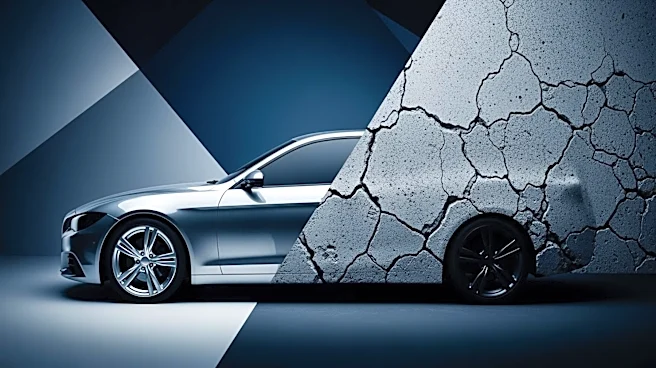
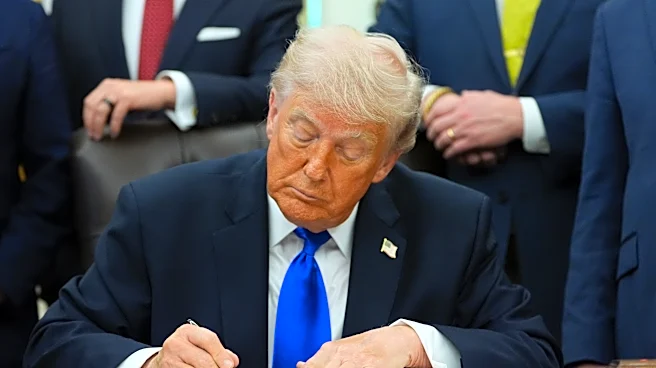
President Trump has announced plans to increase tariffs on imported vehicles from Europe, raising them from 15% to 25%. This decision comes as a response to what Trump perceives as a breach of a previous
trade agreement by the European Union. The announcement has already caused a significant drop in the stock prices of major European car manufacturers such as Volkswagen, BMW, and Stellantis. The European Commission has indicated that it will consider its options in response to this tariff threat. This development is part of a broader context of trade tensions between the U.S. and Europe, as well as with other global trading partners.
Why It's Important?
The proposed tariff increase by President Trump could have substantial implications for international trade relations, particularly affecting the automotive industry. European car manufacturers may face increased costs and reduced competitiveness in the U.S. market, potentially leading to economic repercussions in Europe. This move could also escalate trade tensions between the U.S. and the European Union, possibly leading to retaliatory measures. Additionally, the decision reflects ongoing challenges in global trade negotiations, particularly with major economies like China and the BRICS nations, which could further complicate international economic relations.
What's Next?
The European Union is likely to explore various options to counteract the impact of the proposed tariffs. This could include diplomatic negotiations or the implementation of retaliatory tariffs on U.S. goods. The situation may also prompt discussions within the EU about strengthening trade alliances with other global partners to mitigate the impact of U.S. trade policies. The automotive industry, both in Europe and the U.S., will be closely monitoring these developments, as they could influence production, pricing, and market strategies.