








What's Happening?
Researchers at Ohio State University have developed a new digital scent technology called 'Scentronic,' which enables the remote sharing of smells. This innovation connects an electronic nose (e-nose) that detects and classifies odors with a scent generator
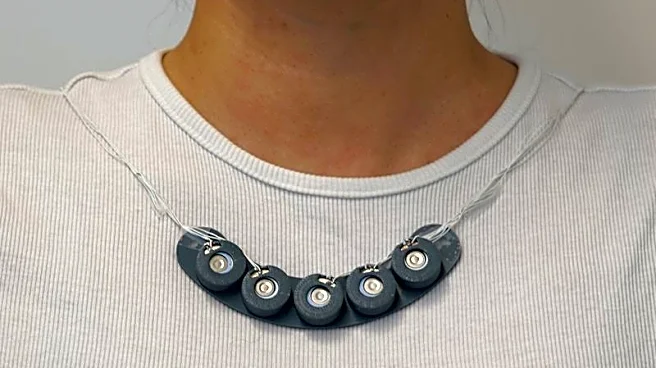
that recreates them at a distant location. The e-nose uses an array of gas sensors and a machine-learning model to recognize specific scents, such as beer, cake, coffee, oranges, and red wine. Once an odor is identified, the information is transmitted via an online platform to a scent generator, which then releases corresponding fragrance molecules. This technology aims to integrate the sense of smell into remote communication, enhancing experiences that currently rely on visual and audio information. The e-nose device is approximately 6 inches in diameter, while the scent generators have been developed in various portable forms, including wristband, necklace, and handheld designs. Chunyu Yang, an Ohio State University doctoral student and lead author of the study published in Science Advances, emphasized that the scent molecules themselves are not transmitted over the internet; rather, the information is used to trigger a local recreation of the smell.
Why It's Important?
This development holds significant implications for various U.S. industries and consumer experiences. For individuals, it could revolutionize remote communication by adding an olfactory dimension to video calls and shared digital content, making interactions more immersive and emotionally engaging. In the retail sector, 'Scentronic' could transform online shopping by allowing customers to remotely sample product scents, such as perfumes, home fragrances, or even food items, before making a purchase. This could reduce return rates and enhance customer satisfaction. The technology also has potential applications in virtual and augmented reality, creating more realistic and sensory-rich digital environments. While currently a research prototype, its commercialization could open new markets and create demand for specialized hardware and software, impacting the tech and consumer goods industries. The ability to share scents remotely could also benefit personal connections, allowing individuals to share the aroma of a meal or a familiar environment with loved ones far away, fostering deeper emotional bonds.
What's Next?
The 'Scentronic' technology is currently a research prototype, and significant development is required before commercialization. Future steps include expanding the e-nose's training dataset to recognize a broader range of odors and improving its reliability in real-world conditions where smells often occur in mixtures. The scent generator also needs further refinement to support more scents while maintaining a compact and user-friendly design. Researchers will need to address considerations such as scent fidelity, refillability, durability, manufacturing costs, and the safety of repeated exposure to the scented mist. While integrating the technology directly into smartphones presents challenges due to space and weight constraints, a more immediate possibility involves smartphones connecting to scent-generating accessories. The research team envisions a future where video and audio communication could be combined with corresponding scents, provided the system can recognize the relevant odor and the receiver has the appropriate scent formulation available. This ongoing research could lead to partnerships with technology companies and consumer brands to bring these capabilities to market.
Beyond the Headlines
The 'Scentronic' technology touches upon deeper implications concerning human sensory experience and digital interaction. By enabling the remote transmission of scent, it challenges the traditional limitations of digital communication, which have primarily focused on sight and sound. This could lead to a re-evaluation of how humans perceive and interact with digital content, potentially fostering a more holistic and immersive digital existence. Ethically, the development raises questions about the potential for misuse, such as the creation of unpleasant or misleading scents, and the need for regulations to ensure responsible deployment. Culturally, the ability to share scents could influence how people connect with distant places and memories, potentially creating new forms of cultural exchange and personal expression. The long-term impact could include a shift in how products are marketed and consumed, with a greater emphasis on sensory branding and personalized olfactory experiences. This technology could also pave the way for advancements in areas like remote diagnostics, where specific odors might indicate health conditions, or in environmental monitoring, by detecting airborne pollutants.