



What's Happening?
The United States Department of State has issued a directive urging American citizens to leave more than a dozen countries in the Middle East as the conflict between the US, Israel, and Iran intensifies. This comes after a series of airstrikes have led
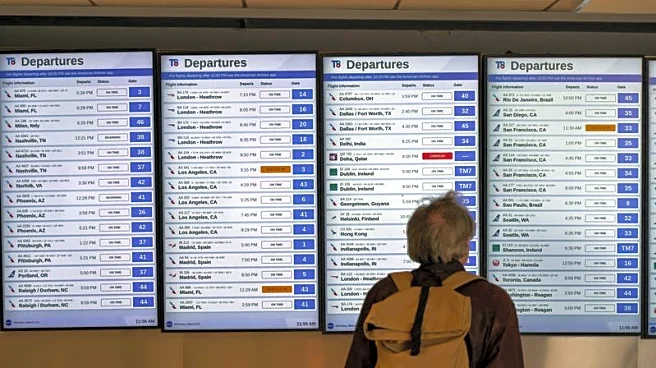
to the closure or severe restriction of major Gulf airports, including Dubai, Doha, and Abu Dhabi, leaving tens of thousands of passengers stranded. The conflict has resulted in the cancellation of over 21,000 flights, significantly disrupting travel and complicating operations for global air carriers. Gulf airlines such as Emirates, flydubai, and Etihad have been operating limited flights primarily to repatriate stranded passengers. The US is also securing military and charter flights to evacuate its citizens, with the State Department in contact with nearly 3,000 Americans in the region.
Why It's Important?
The escalation of conflict in the Middle East has significant implications for global travel and the airline industry. The closure of major Gulf hubs, which serve as critical links between Europe and Asia, is causing widespread disruption. This situation is reminiscent of the COVID-19 pandemic's impact on air travel, with potential financial losses running into billions of dollars. The conflict is also affecting oil prices, which have surged, threatening to increase jet fuel costs and squeeze airline profits. The situation underscores the vulnerability of global travel networks to geopolitical tensions and highlights the potential economic impact on tourism and related industries.
What's Next?
As the conflict continues, airlines and governments are working to manage the immediate crisis by arranging repatriation flights and exploring alternative routes. The long-term impact on the airline industry will depend on the duration of the conflict and the ability of airlines to adapt to new travel corridors. The US government may face criticism for its handling of the situation, particularly regarding the timing of its travel advisories. The ongoing conflict could also lead to further geopolitical shifts in the region, affecting international relations and economic stability.