
What's Happening?
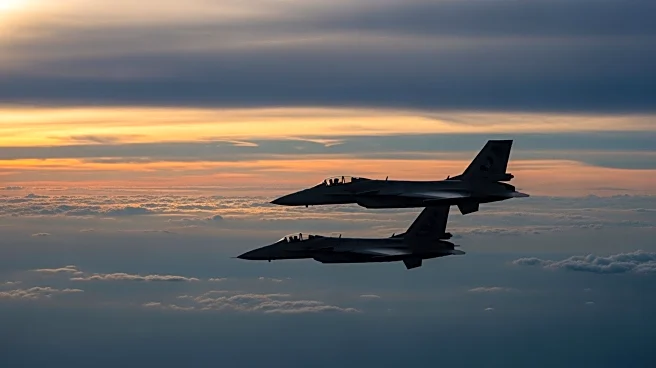
The U.S. deployed two F/A-18 fighter jets over the Gulf of Venezuela, marking the closest known approach to Venezuelan airspace by U.S. military aircraft. The mission, described as a 'routine training
flight,' was intended to demonstrate the operational reach of the aircraft. This operation follows months of increased U.S. military activity in the region, including strikes on drug-smuggling vessels. The U.S. maintains that these operations are crucial for curbing illicit drug trafficking, a claim denied by Venezuelan President Nicolás Maduro. The deployment aligns with President Trump's directive to treat Venezuelan airspace as effectively closed to civilian carriers.
Why It's Important?
This military maneuver highlights the escalating tensions between the U.S. and Venezuela, with potential implications for regional security and international relations. The U.S. aims to assert its military presence and deter perceived threats from Venezuela's air-naval systems. The operation reflects broader U.S. strategies to combat drug trafficking and challenge the Maduro regime's legitimacy. The situation could influence U.S. foreign policy and military strategy in Latin America, affecting diplomatic relations and economic conditions in the region.
What's Next?
The U.S. is expected to continue its military operations and diplomatic efforts to pressure the Maduro regime. Future actions may include additional military exercises and intelligence operations to assess and counter Venezuela's defense capabilities. The international community will monitor the situation closely, as any escalation could impact regional stability and global diplomatic dynamics. The U.S. may also consider further sanctions or diplomatic initiatives to isolate Venezuela and support opposition forces.