
What's Happening?
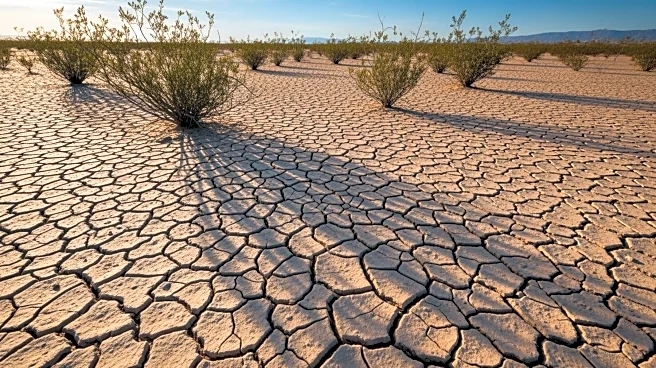
A recent World Bank report titled 'Continental Drying: A Threat to Our Common Future' has revealed a significant decline in global freshwater reserves, with a net annual loss of 324 billion cubic meters.
This loss is sufficient to meet the annual needs of 280 million people. The report highlights that global freshwater reserves have decreased by three percent of the average annual supply, with dry regions experiencing a ten percent depletion. This decline is exacerbated by increasing water consumption, which rose by 25 percent between 2000 and 2019, largely due to population growth and inefficient water use in agriculture. The agriculture sector, responsible for 98 percent of human water use, is identified as a major contributor to wasteful water consumption due to inefficient practices and water-intensive crops.
Why It's Important?
The decline in freshwater reserves poses a significant threat to global agriculture, which relies heavily on water for crop production. As water becomes scarcer, the imbalance in the freshwater cycle could lead to severe consequences for food security and economic stability, particularly in dry regions. The report underscores the need for more efficient water use in agriculture to prevent further depletion of water resources. The phenomenon of 'virtual water trade,' where water-intensive products are exported, further complicates the issue, as it diverts water from local needs to international markets. This situation highlights the urgent need for sustainable water management practices to ensure long-term water security and agricultural productivity.
What's Next?
To address the challenges posed by declining freshwater reserves, there is a need for global cooperation and policy changes aimed at improving water use efficiency in agriculture. Countries may need to invest in modernizing irrigation infrastructure and adopting water-saving technologies. Additionally, there could be a push towards developing crops that require less water and are more resilient to drought conditions. Policymakers might also consider regulating virtual water trade to prioritize local water needs over exports. These steps are crucial to mitigating the impact of water scarcity on agriculture and ensuring food security for future generations.
Beyond the Headlines
The decline in freshwater reserves also raises ethical and environmental concerns. The over-extraction of water for agriculture and export products can lead to environmental degradation, affecting ecosystems and biodiversity. There is a growing need to balance economic interests with environmental sustainability. Furthermore, the issue of water scarcity could exacerbate social inequalities, as marginalized communities may face greater challenges in accessing clean water. Addressing these deeper implications requires a holistic approach that considers the social, economic, and environmental dimensions of water management.