

What's Happening?
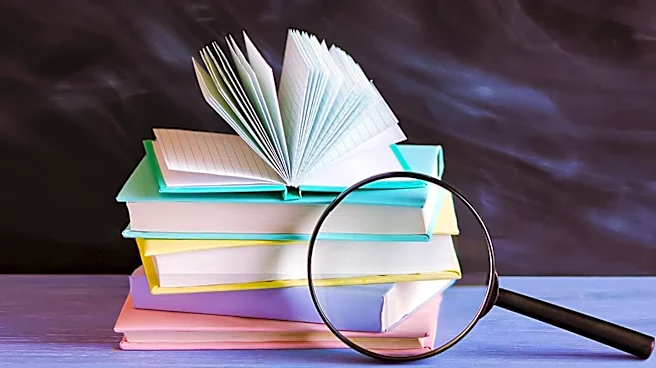
The banned books movement in the United States has seen a significant increase in book bans, particularly in public libraries, with over 23,000 book bans in school libraries since 2021. This trend has expanded to public libraries, where 51% of all book bans documented
by the American Library Association occurred. The books frequently targeted for removal often feature LGBTQ+ characters, characters of color, and discussions of race and racism. This movement is characterized by coordinated efforts from groups like Moms for Liberty, the implementation of state and federal legislation that restricts reading rights, and direct attacks on librarians. These censorship actions are being compared to segregation, as they are seen as depriving students of color of equal educational opportunities, thereby violating the spirit of Brown v. Board of Education.
Why It's Important?
The surge in book bans carries significant implications for U.S. education and civil rights. By disproportionately removing books by authors of color or those addressing race and racism, these bans create educational environments that are substantially inferior for Black students and students of color compared to their white counterparts. This practice undermines the principle of equal protection under the Fourteenth Amendment and hinders the cultural awakening and preparation that education is meant to provide. The targeting of specific viewpoints also stifles intellectual freedom and critical thinking, potentially leading to a less informed and less empathetic society. Furthermore, the coordinated nature of these bans, often driven by political groups, indicates a broader effort to control narratives and limit exposure to diverse perspectives within educational institutions.
What's Next?
The ongoing legal challenges and advocacy efforts against book bans are expected to continue, with lawsuits arguing that the removal of books based on content related to racism, sexuality, and gender constitutes a violation of constitutional rights. Advocacy groups will likely persist in documenting and publicizing instances of book banning to raise public awareness and pressure policymakers. There may also be increased legislative efforts at both state and federal levels, either to further restrict or to protect the right to read. The debate is likely to intensify as communities grapple with balancing parental concerns, educational freedom, and the principles of diversity and inclusion in public and school libraries. The long-term impact on curriculum development and the availability of diverse literature in educational settings will be a key area of focus.
Beyond the Headlines
Beyond the immediate impact on access to books, the banned books movement reflects deeper societal tensions regarding cultural values, identity, and the control of information. The comparison of these bans to segregation highlights a concern that such actions could lead to a de facto 'separate but equal' educational system, where certain students are denied access to a full and diverse range of knowledge. This raises ethical questions about who decides what is appropriate for public consumption and the potential for censorship to perpetuate systemic inequalities. The movement also underscores the vulnerability of librarians and educators who are on the front lines of these challenges, often facing harassment and legal threats. The long-term cultural shift could see a generation of students with limited exposure to diverse viewpoints, potentially impacting their ability to engage with complex social issues and understand different lived experiences.