



What's Happening?
New York City is actively implementing sustainable drainage systems to address sidewalk flooding and reduce stormwater runoff pollution. The city's approach combines traditional 'grey' infrastructure, such as proper grading, integral curb and gutter systems,
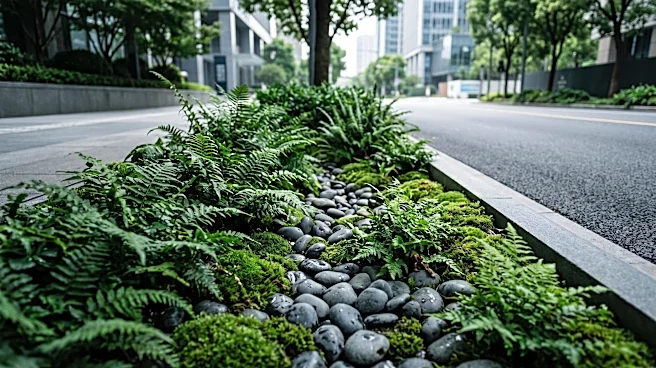
and robust piping with catch basins, with innovative 'green' infrastructure solutions. Green infrastructure includes right-of-way rain gardens, bioswales, porous pavement, and Bluebelts, which are natural drainage corridors. These systems work in conjunction to channel water away from pedestrian areas, absorb rainfall, and filter pollutants before they enter local waterways. The NYC Department of Environmental Protection (DEP) aims to cut combined sewer overflow (CSO) volume by 1.67 billion gallons per year by 2030 through its Green Infrastructure Program, with over 16,000 installations already in place.
Why It's Important?
This initiative is crucial for New York City's urban resilience and environmental health. Sidewalk flooding not only creates safety hazards and damages infrastructure but also contributes to significant water pollution through combined sewer overflows, where untreated sewage mixes with stormwater and discharges into rivers and harbors. By effectively managing stormwater, the city can protect its waterways, improve public health, and enhance the longevity of its infrastructure. The integration of green infrastructure also offers co-benefits such as increased green spaces, improved air quality, and enhanced urban aesthetics. This comprehensive approach serves as a model for other densely populated U.S. cities facing similar challenges, demonstrating how urban development can be harmonized with environmental protection.
What's Next?
New York City anticipates more intense rainfall in the coming years, making the continuous development and maintenance of these drainage systems critical. The DEP's Green Infrastructure Program is expected to expand, with ongoing efforts to identify and implement new installations across all five boroughs. Property owners are also being encouraged to participate through funding programs for green infrastructure on private properties and by adhering to administrative codes regarding sidewalk maintenance and drainage. Future developments will likely include further technological advancements in drainage solutions and increased public awareness campaigns to ensure community involvement in maintaining these systems. The city's long-term goal is to create a more resilient and environmentally sustainable urban environment.
Beyond the Headlines
The shift towards sustainable drainage in New York City highlights a broader paradigm change in urban planning, moving from solely engineered solutions to nature-based approaches. This reflects a growing understanding of ecological principles in urban design and the recognition that natural systems can provide cost-effective and resilient solutions to environmental challenges. The initiative also underscores the interconnectedness of urban infrastructure, public health, and environmental quality, emphasizing that seemingly small details like sidewalk drainage have far-reaching implications. This integrated approach could inspire a re-evaluation of urban development strategies nationwide, promoting a more holistic and sustainable vision for cities that prioritizes both human well-being and ecological integrity.