



What's Happening?
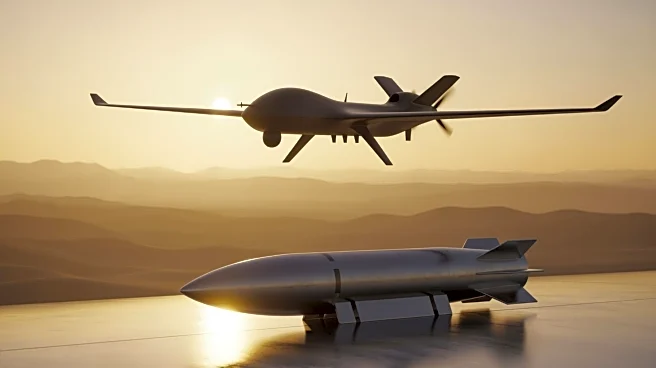
The U.S. Department of the Treasury's Office of Foreign Assets Control (OFAC) has imposed sanctions on 10 individuals and entities in Venezuela and Iran. This action targets a Venezuelan company involved in Iran's unmanned aerial vehicle (UAV) trade with
Venezuela. The sanctions are part of a broader effort to curb Iran's military-industrial activities and its provision of conventional weapons to Venezuela. The Treasury's move builds on previous nonproliferation designations and aims to prevent Iran's UAV and missile programs from threatening U.S. and allied personnel in the Middle East, as well as destabilizing commercial shipping in the Red Sea. The sanctions also address Iran's ongoing provision of conventional weapons to Caracas, which poses a threat to U.S. interests in the Western Hemisphere.
Why It's Important?
The sanctions underscore the U.S. government's commitment to countering Iran's military capabilities and its influence in the Western Hemisphere. By targeting the Iran-Venezuela weapons trade, the U.S. aims to disrupt the supply chain of military technology that could threaten regional stability and U.S. interests. The sanctions could have significant implications for the military and economic relations between Iran and Venezuela, potentially limiting their ability to collaborate on defense projects. Additionally, the sanctions serve as a warning to other countries and entities that might consider engaging in similar transactions with Iran, highlighting the risks of facing U.S. economic penalties.
What's Next?
The U.S. Treasury is likely to continue monitoring and targeting entities involved in Iran's military-industrial complex. The sanctions could lead to further diplomatic tensions between the U.S., Iran, and Venezuela. Other countries and financial institutions may also face secondary sanctions if they engage in transactions with the designated entities. The U.S. government may pursue additional measures to prevent the proliferation of weapons and military technology from Iran to other regions. The effectiveness of these sanctions will depend on the international community's cooperation in enforcing them and the willingness of other nations to align with U.S. policies.