
What's Happening?
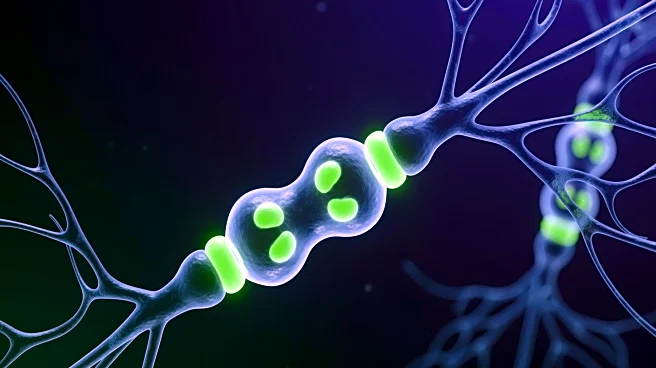
Researchers at Karolinska Institutet and the RIKEN Center for Brain Science have identified two brain receptors, SST1 and SST4, that regulate the breakdown of amyloid beta, a protein associated with Alzheimer's disease. The study, published in the Journal
of Alzheimer’s Disease, demonstrates that activating these receptors enhances the activity of neprilysin, an enzyme responsible for clearing amyloid beta. This discovery was made using genetically modified mice and cell cultures, showing that stimulating these receptors can reduce amyloid beta buildup and improve memory without serious side effects. The findings suggest a potential for developing new treatments that are safer and more cost-effective than current antibody-based therapies.
Why It's Important?
Alzheimer's disease is a leading cause of dementia, characterized by the accumulation of amyloid beta plaques in the brain. Current treatments are expensive and can have significant side effects. The discovery of SST1 and SST4 receptors offers a promising alternative by potentially allowing for the development of small molecule drugs that can pass the blood-brain barrier. These drugs could be less costly and easier to administer, providing a more accessible treatment option for patients. This research could significantly impact the pharmaceutical industry and healthcare systems by reducing the economic burden of Alzheimer's treatment.
What's Next?
The next steps involve further research to develop small molecule drugs targeting SST1 and SST4 receptors. These drugs need to be tested for efficacy and safety in human trials. Additionally, researchers will explore the potential for these treatments to be used in combination with existing therapies to enhance their effectiveness. Collaboration with pharmaceutical companies will be crucial to bring these new treatments to market. The research community will also focus on understanding the broader implications of these receptors in other neurodegenerative diseases.