






What's Happening?
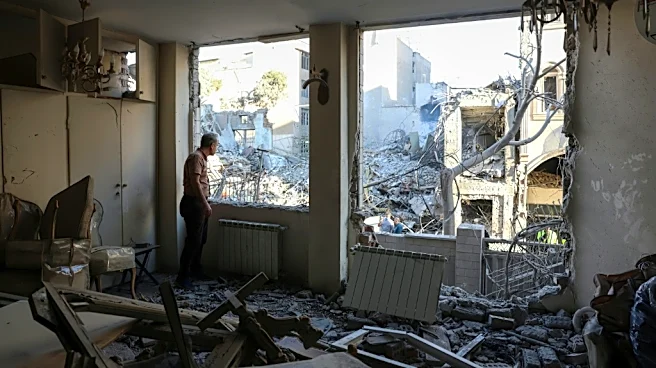
Vice President J.D. Vance announced that the United States and Iran failed to reach a peace agreement after 21 hours of negotiations in Pakistan. The talks aimed to resolve the ongoing conflict involving the U.S., Israel, and Iran but ended without a deal.
Vance highlighted that the discussions were substantive but could not overcome key differences. The U.S. delegation emphasized its red lines, suggesting that the lack of an agreement poses a greater challenge for Iran than for the U.S. The delegation is now returning home without a resolution.
Why It's Important?
The inability to secure a peace deal underscores the complexities of international diplomacy, particularly in conflicts involving nuclear capabilities and regional power dynamics. The ongoing conflict has significant implications for global security and economic stability, especially given Iran's strategic position in the Strait of Hormuz. The failure to reach an agreement may lead to increased military tensions and further destabilize the region, affecting global oil markets and international relations.
What's Next?
The U.S. and Iran may face increased pressure to resume negotiations to prevent further escalation. The international community, including regional allies and global powers, may need to engage more actively to facilitate dialogue and prevent a broader conflict. The situation remains fluid, with potential for both diplomatic and military developments in the coming weeks.