




What's Happening?
San Diego County health officials have confirmed a mumps outbreak at San Diego State University (SDSU), involving five confirmed and probable cases among student athletes. Dr. Tanushree Ghosh, Student Health Services medical director, stated that these
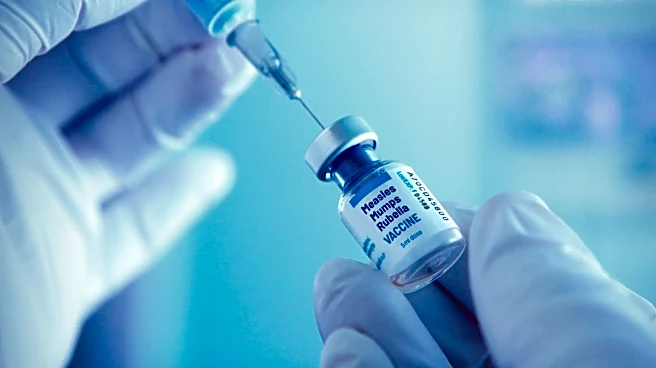
cases are connected and confined to a single student athletic team. The affected students are no longer considered contagious. In response, SDSU's Student Health Services is collaborating with the county's Public Health Services (PHS) to conduct detailed symptom-screening and testing for all members of the affected athletic team, with ongoing regular screenings. PHS is also offering screening and vaccine clinics for students identified as potential close contacts through their contact tracing efforts. The students first exhibited symptoms on September 6, with the initial case confirmed this week. Mumps is a highly contagious viral illness that spreads easily in close-contact environments, typically within three feet, through activities like kissing, sharing food or drinks, or exposure to coughs or sneezes. An individual can be contagious for two days before symptoms appear and throughout the duration of their illness.
Why It's Important?
This mumps outbreak at SDSU highlights the ongoing public health challenges posed by infectious diseases, particularly in densely populated environments like university campuses. The rapid response by SDSU and San Diego County health officials underscores the importance of swift contact tracing, screening, and vaccination efforts to contain outbreaks and prevent wider community transmission. For student athletes, the impact extends beyond health concerns, potentially disrupting training schedules, competition participation, and academic performance. The contagious nature of mumps, with individuals being infectious before symptoms manifest, makes early detection and isolation critical. Furthermore, the outbreak serves as a reminder of the vulnerability of immune-compromised individuals and the potential for serious complications from mumps, including infections in and around the brain, and sterility. The incident emphasizes the need for continued vigilance and adherence to public health guidelines, including vaccination, to protect the health and safety of university communities and the broader public.
What's Next?
San Diego State University and the county's Public Health Services will continue their collaborative efforts to manage the mumps outbreak. This includes ongoing detailed symptom-screening and testing for members of the affected student athletic team. PHS will proceed with offering screening and vaccine clinics for individuals identified as close contacts, with information on these clinics being sent directly to those affected. Students or faculty experiencing mumps symptoms are urged to self-isolate immediately and seek medical attention. The collaboration with the California Department of Public Health will also continue for comprehensive outbreak management, including testing of known close contacts. The university will likely maintain heightened awareness and communication regarding mumps prevention and symptoms to the wider student body and staff. The effectiveness of these measures will determine the containment of the outbreak and prevent further spread within the university and surrounding community.
Beyond the Headlines
The mumps outbreak at San Diego State University underscores broader societal implications regarding public health and community responsibility. University settings, characterized by close living quarters and frequent social interaction, are particularly susceptible to the rapid spread of infectious diseases. This event highlights the critical role of vaccination programs in maintaining herd immunity and protecting vulnerable populations. Beyond the immediate health concerns, such outbreaks can lead to significant disruptions in academic and extracurricular activities, impacting student well-being and institutional operations. The incident also brings to light the ethical considerations surrounding privacy in contact tracing versus the public health imperative to disclose information for containment. It serves as a case study for public health agencies and educational institutions on effective crisis communication, resource allocation for testing and vaccination, and the importance of proactive health education to mitigate future outbreaks. The long-term implications could include a re-evaluation of health protocols and vaccination requirements for students, especially those involved in close-contact activities like sports.