





What's Happening?
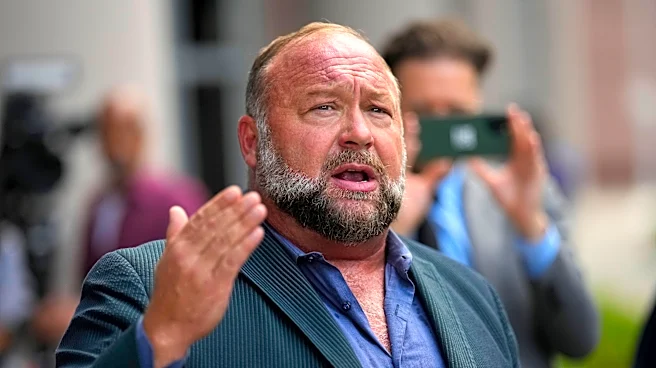
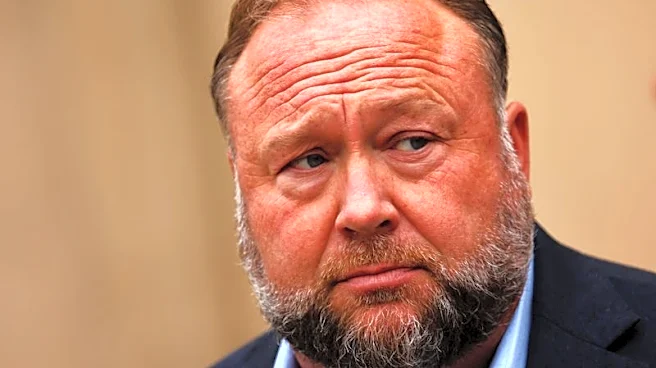
A Texas court has significantly reduced the defamation judgment against conspiracy theorist Alex Jones, founder of Infowars, related to his false claims about the 2012 Sandy Hook Elementary School massacre. The Texas Third Court of Appeals ruled that
Jones can only be compelled to pay approximately $6 million, down from an initial $50 million. This reduction is attributed to state laws that cap lawsuit damages. The ruling maintains over $4.1 million in compensatory damages awarded to Sandy Hook parents Neil Heslin and Scarlett Lewis for defamation and emotional distress but slashes over $45 million in punitive damages to $1.5 million, adhering to the state's $750,000 cap per plaintiff. The court determined that Heslin and Lewis did not provide sufficient evidence to exceed this cap and that the trial judge improperly allowed them to seek higher damages post-trial. Jones has called this decision a 'gigantic victory for the First Amendment' and plans to appeal further to the state Supreme Court to eliminate the remaining damages.
Why It's Important?
This ruling highlights the complexities and limitations within the U.S. legal system regarding defamation lawsuits and punitive damages, particularly in cases involving high-profile media figures. While the decision reduces Jones' financial liability in Texas, it does not negate the finding of defamation against him. The case underscores the ongoing struggle for victims of misinformation to achieve full restitution and accountability. For the Sandy Hook families, who have yet to collect any money from Jones, this reduction in Texas contrasts sharply with a separate $1.25 billion judgment against him in Connecticut, which remains unaffected. This disparity in judgments across states reveals potential inconsistencies in how similar cases are handled and the varying legal frameworks that govern them. The outcome could influence future legal strategies for both plaintiffs seeking damages for defamation and defendants invoking First Amendment protections, particularly in cases involving online platforms and the spread of conspiracy theories.
What's Next?
Alex Jones intends to appeal the Texas Third Court of Appeals' decision to the state Supreme Court, seeking to have the remaining damages thrown out entirely. Meanwhile, the $1.25 billion judgment against Jones in Connecticut remains in effect, and he was denied an appeal to the U.S. Supreme Court last year for that case. The ongoing legal proceedings in Texas also involve the liquidation of Infowars' parent company, Free Speech Systems, which has been complicated by Jones' appeals and bankruptcy filings. The satirical website The Onion's attempt to acquire Infowars' assets through a bankruptcy court auction has been put on hold due to these liquidation proceedings. Sandy Hook families' attorney, Mark Bankston, views the Texas ruling as 'irrelevant' given the substantial Connecticut judgment, emphasizing that Jones still faces massive financial liability. The legal battles are expected to continue as Jones exhausts his appeal options and the families pursue collection of the awarded damages.
Beyond the Headlines
The Alex Jones case transcends a typical defamation lawsuit, delving into profound questions about free speech, journalistic responsibility, and the societal impact of misinformation in the digital age. While Jones claims the ruling is a victory for the First Amendment, critics argue that it underscores the challenges of holding individuals accountable for harmful falsehoods, especially when state laws limit financial penalties. The case highlights the emotional and psychological toll on victims and their families who are subjected to harassment and threats fueled by conspiracy theories. It also brings into focus the role of platforms like Infowars in disseminating such content and the broader implications for media ethics and content moderation. The ongoing legal saga could contribute to evolving legal precedents concerning online speech, the definition of defamation, and the balance between free expression and protection from malicious falsehoods, potentially influencing how future cases involving public figures and the spread of disinformation are adjudicated.