






What's Happening?
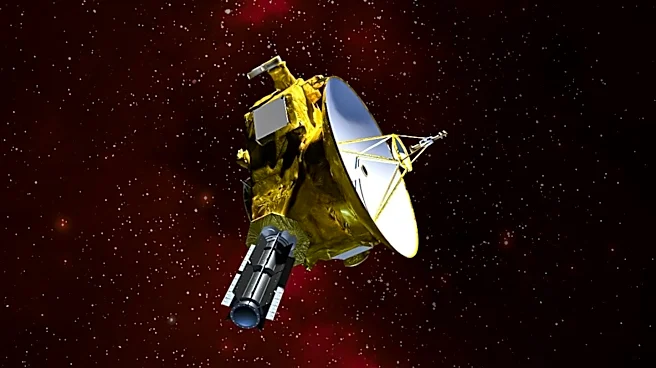
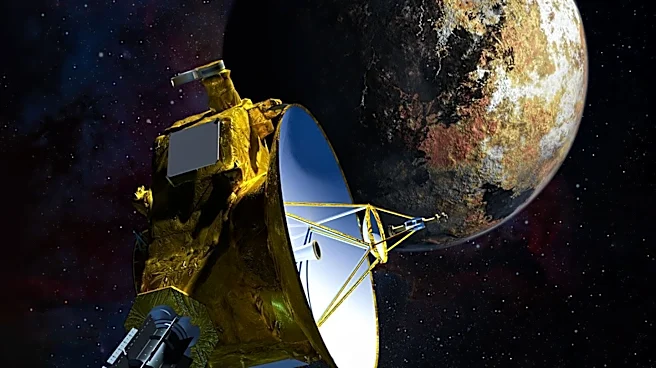
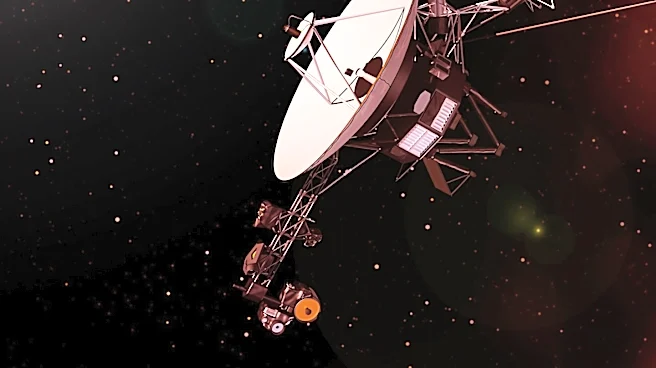
NASA's New Horizons spacecraft has awakened from a nearly yearlong hibernation at the edge of the Solar System, approximately 10 billion kilometers from Earth. The spacecraft, known for its historic flyby of Pluto in 2015, is now set to explore the heliosphere,
the region where the solar wind slows and interacts with interstellar space. After waking on June 23, New Horizons will begin transmitting data collected during its hibernation period. The spacecraft is currently 64 astronomical units from Earth, with radio signals taking about nine hours to reach mission control. Engineers report that the spacecraft is in good condition, with all systems functioning as expected.
Why It's Important?
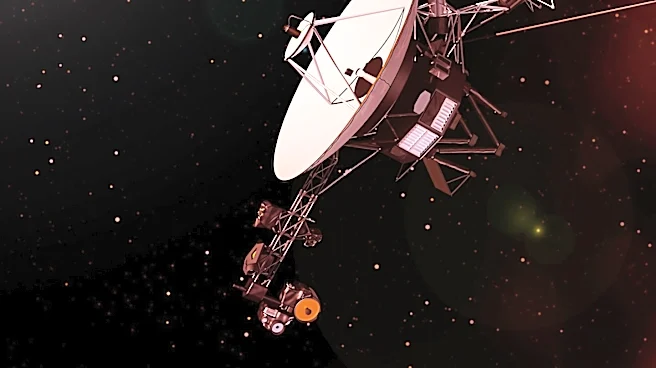
The reactivation of New Horizons is significant for space exploration, as it continues to provide valuable data from a region of space that few missions have explored. The spacecraft's study of the heliosphere will enhance our understanding of the boundary between our solar system and interstellar space, a frontier previously crossed only by the Voyager probes. This research is crucial for understanding the solar wind's interaction with the galaxy and could provide insights into the broader dynamics of our solar system's environment. The data collected by New Horizons will contribute to the scientific community's knowledge of space physics and the processes occurring at the solar system's edge.
What's Next?
In the coming weeks, New Horizons will focus on studying hydrogen in the outer heliosphere, aiming to understand the termination shock where the solar wind slows down. This research will help scientists comprehend the transition from the solar system to interstellar space. If no new Kuiper Belt objects are identified for exploration, New Horizons is expected to leave the Kuiper Belt by 2028 or 2029, continuing its journey into interstellar space. The mission's findings will be eagerly anticipated by scientists worldwide, as they offer a rare glimpse into the outer reaches of our solar system.