
What's Happening?
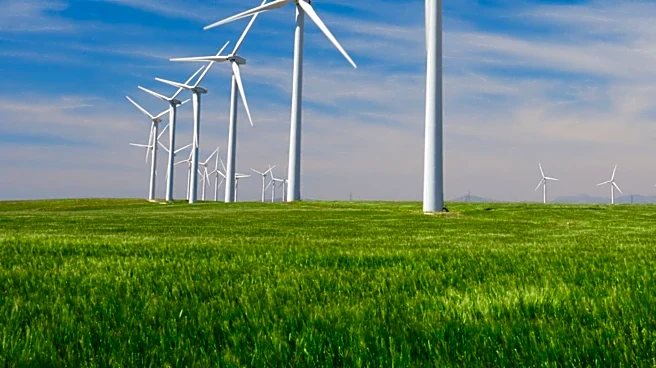
The SunZia wind farm in central New Mexico is now fully operational, featuring 916 wind turbines that collectively supply power to approximately one million homes. This project, developed by Pattern Energy,
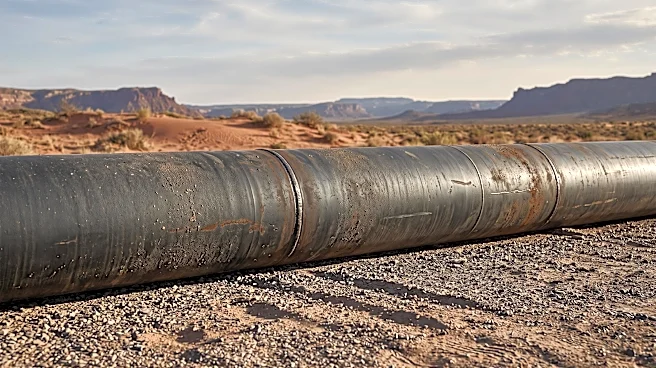
has a capacity of 3,650 megawatts, exceeding the power generation of the Hoover Dam. The turbines, sourced from GE Vernova and Vestas, are spread across Lincoln, Torrance, and San Miguel counties. The power generated is transmitted via an 880-kilometer (550-mile) high-voltage direct current line from central New Mexico to Arizona, and then into the grid of the western U.S., including Southern California. Approximately 2,131 megawatts of this power are designated for Southern California. The project cost $11 billion and took over 18 years from conception to completion, with construction beginning in 2023. During its peak, over 2,000 people were employed in its construction, and more than 100 individuals now hold permanent positions managing the project in New Mexico and Arizona.
Why It's Important?
The SunZia wind farm significantly boosts renewable energy capacity in the U.S., particularly in New Mexico, where wind power now accounts for 45% of the state's electricity capacity. This project is crucial for California's energy grid, as the nighttime wind from New Mexico complements California's solar power and battery storage, addressing the grid's demand when solar generation declines. The Clean Power Alliance, California's largest buyer, highlights the complementary nature of this wind power. The project also represents a substantial economic investment, contributing $1.3 billion directly to local governments, schools, counties, and landowners over its first 30 years. Its scale, being more than three times larger than the next two largest wind farms in the country, sets a new benchmark for renewable energy infrastructure in the U.S. and demonstrates a significant step towards reducing reliance on fossil fuels.
What's Next?
The successful operation of the SunZia wind farm is expected to encourage further investment and development in large-scale renewable energy projects across the U.S. The project's model of transmitting wind power across states to meet demand during off-peak solar hours could become a blueprint for future inter-state energy infrastructure. The University of California, CleanPowerSF, and Ava Community Energy are among the entities that have already signed agreements for power from SunZia, indicating a growing demand for such large-scale clean energy sources. In Arizona, the Salt River Project has an agreement for 600 megawatts, tripling its wind power capacity. The long-term financial contributions to local communities and the creation of permanent jobs will continue to benefit the regions involved, potentially fostering more local support for similar initiatives.
Beyond the Headlines
The SunZia project underscores the evolving landscape of energy production and distribution in the U.S., highlighting the increasing integration of renewable sources into the national grid. The development of such a massive high-voltage direct current system, one of the first in a generation, signifies a critical advancement in energy transmission technology. This project also brings to light the complex logistical and financial challenges of developing large-scale infrastructure, requiring over 18 years from concept to completion and an $11 billion investment. The reliance on wind power to complement solar energy during different times of the day illustrates a sophisticated approach to grid management and energy reliability, moving towards a more resilient and sustainable energy future. It also emphasizes the importance of cross-state collaboration in achieving national renewable energy goals.