



What's Happening?
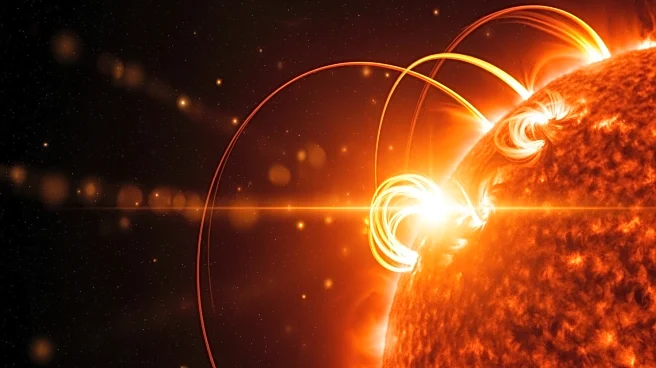
The Sun released a strong X4.2 solar flare, captured by NASA's Solar Dynamics Observatory. Solar flares are intense bursts of energy that can affect radio communications, power grids, and navigation signals on Earth. This particular flare, classified
as X-class, represents the most intense category of solar flares. NASA's observatory constantly monitors the Sun to study its activity and the potential impacts on Earth's space environment.
Why It's Important?
Solar flares can have significant effects on Earth's technological infrastructure, including disruptions to communication systems and power grids. Understanding and predicting solar activity is crucial for mitigating these impacts and ensuring the safety of satellites and astronauts. The study of solar flares also contributes to our knowledge of the Sun's behavior and its influence on the solar system. This event underscores the importance of space weather research and the need for preparedness in managing its effects.
What's Next?
NASA and other space agencies will continue to monitor solar activity and provide updates on potential impacts. The data collected from this flare will be analyzed to improve space weather forecasting and develop strategies for protecting Earth's infrastructure. Ongoing research will focus on understanding the mechanisms behind solar flares and their interactions with Earth's magnetic field. Collaboration between international space agencies will be essential in advancing space weather research and response capabilities.
Beyond the Headlines
The occurrence of solar flares raises questions about the resilience of Earth's technological systems and the need for robust infrastructure to withstand space weather events. It also highlights the interconnectedness of space and terrestrial environments, emphasizing the importance of interdisciplinary research in addressing these challenges. The study of solar flares contributes to our understanding of the Sun's lifecycle and its impact on the solar system.