






What's Happening?
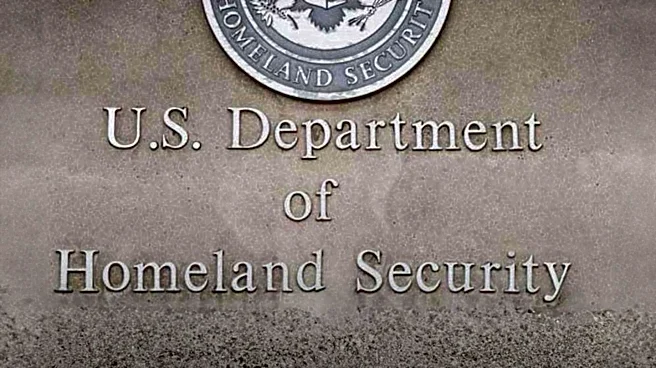
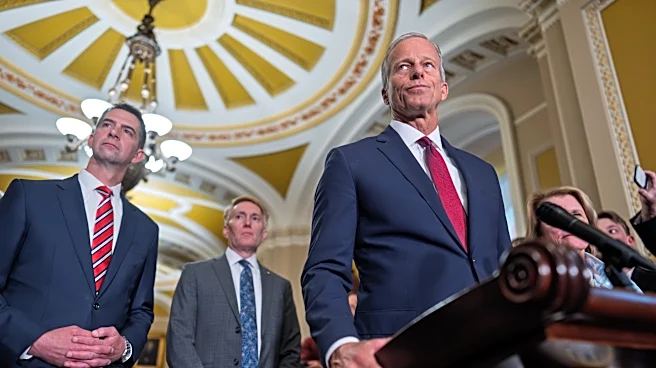
The U.S. Senate has passed a $70 billion funding bill for federal immigration enforcement agencies, including Immigration and Customs Enforcement (ICE) and Customs and Border Protection (CBP). The bill was approved by a narrow margin of 52-47, utilizing
the reconciliation process to bypass the filibuster. This decision comes after previous funding efforts stalled due to the killing of two U.S. citizen protesters by immigration enforcement officers. Democrats had pushed for reforms such as requiring visible identification for officers, the use of judicial warrants, and prohibiting masks, but these were not included in the final bill. The measure also faced opposition from some Republicans who objected to a proposed $1 billion allocation for a White House ballroom, which was ultimately removed. The bill's passage reflects ongoing tensions over immigration policy and enforcement practices.
Why It's Important?
The passage of this funding bill is significant as it underscores the contentious nature of immigration policy in the U.S. The decision to fund ICE and CBP without implementing proposed reforms highlights the divide between Republicans and Democrats on immigration enforcement. For Republicans, the bill represents a commitment to maintaining strong border security measures, while Democrats view the lack of reforms as a missed opportunity to address concerns about accountability and transparency within these agencies. The outcome of this legislative process could impact future immigration policy debates and influence public perception of the government's approach to immigration enforcement.
What's Next?
The bill is expected to be taken up by the House of Representatives next week, where it may face further debate and potential amendments. The outcome in the House will determine whether the funding is finalized or if additional negotiations are required. Stakeholders, including immigration advocacy groups and political leaders, are likely to continue lobbying for changes to enforcement practices. The ongoing discussion may also influence upcoming elections, as immigration remains a key issue for many voters.