







What's Happening?
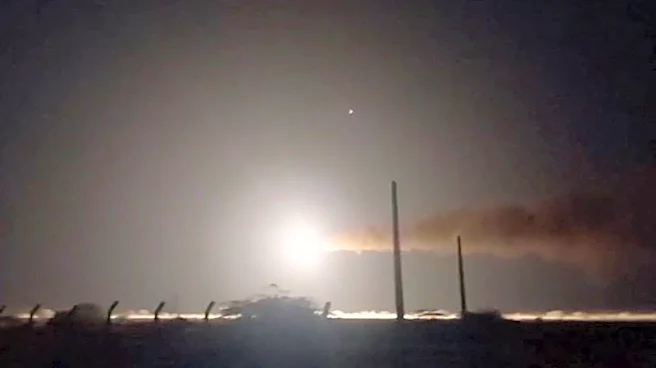
On May 7, 2026, the U.S. Central Command executed retaliatory strikes against Iranian military facilities following unprovoked attacks by Iran on American warships in the Strait of Hormuz. The targeted sites included missile and drone launch locations,
command and control centers, and intelligence nodes. The U.S. military reported that no American assets were hit during the Iranian attacks. The strikes were described as self-defense measures amid ongoing tensions and a fragile ceasefire between the U.S. and Iran. The ceasefire, announced on April 7, aimed to pause full-scale warfare, but recent exchanges have raised concerns about its stability.
Why It's Important?
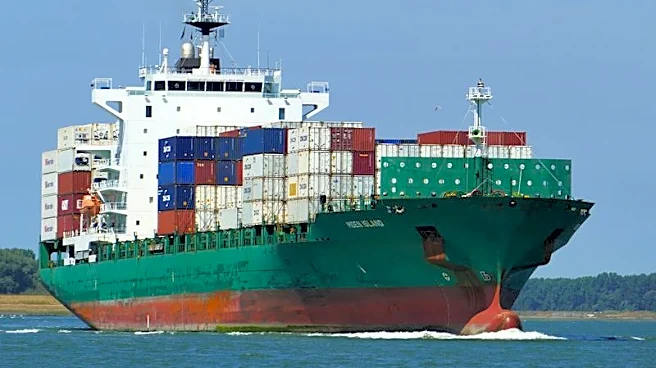
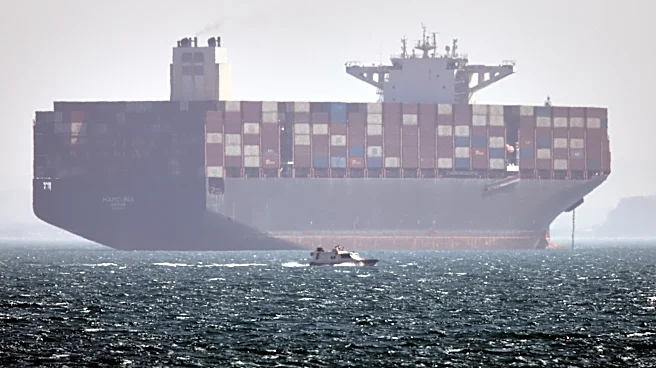
The retaliatory strikes underscore the volatile nature of U.S.-Iran relations and the strategic importance of the Strait of Hormuz, a critical passage for global oil and gas supplies. The incident highlights the challenges in maintaining a ceasefire and the potential for escalation in the region. The U.S. proposal to formally end the conflict, while leaving contentious issues unresolved, reflects the complexity of diplomatic negotiations. The situation impacts international shipping and energy markets, with potential disruptions affecting global economic stability.
What's Next?
The U.S. awaits Iran's response to its proposal to end the conflict, which does not address key demands such as suspending Iran's nuclear program. The ongoing negotiations and military exchanges may influence future diplomatic strategies and regional alliances. Stakeholders, including political leaders and international organizations, are likely to monitor developments closely, considering the implications for regional security and global trade.