
What's Happening?
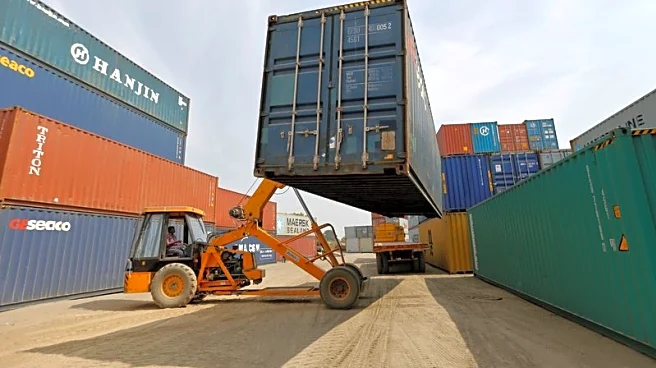
The European Union and the Mercosur bloc, comprising South American countries, have signed a landmark free trade agreement after more than 25 years of negotiations. The agreement aims to eliminate over
90% of tariffs on goods and services between the two regions, creating one of the world's largest free trade zones. However, the deal faces opposition from protectionist lobbies, particularly European farmers concerned about the influx of cheap South American agricultural imports. The agreement includes quotas and safeguard measures to address these concerns. The deal still requires ratification by the European Parliament, where it may face further challenges.
Why It's Important?
This agreement represents a significant geopolitical win for the EU, enhancing its trade relations with South America amidst global trade tensions and protectionist policies. It provides the EU with a strategic foothold in a resource-rich region, countering the influence of the U.S. and China. For Mercosur countries, the deal opens up new markets for their agricultural products, potentially boosting their economies. However, the agreement's success depends on overcoming domestic opposition in Europe, particularly from agricultural sectors fearing competition. The deal's implementation could reshape trade dynamics and economic relations between Europe and South America.
What's Next?
The next step for the agreement is ratification by the European Parliament, where it may encounter resistance from protectionist factions. European farmers and agricultural lobbies are expected to continue their opposition, potentially influencing the ratification process. If ratified, the agreement will gradually reduce tariffs over a 10-15 year period, with specific quotas for sensitive products like beef. The EU will also provide subsidies to support its farmers during the transition. The outcome of the ratification process will determine the agreement's future and its impact on global trade relations.