



What's Happening?
Inside Climate News and the Pittsburgh Post-Gazette have collaborated to create a streamlined mapping tool for abandoned oil and gas wells across Pennsylvania. This initiative addresses the difficulty residents face in identifying wells near their homes,
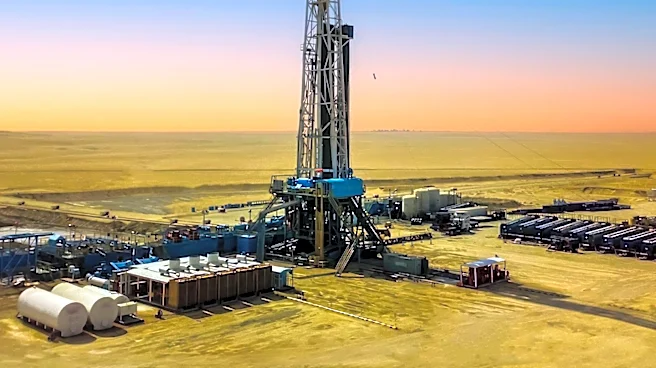
schools, workplaces, and parks using the state's existing Department of Environmental Protection (DEP) tool. Pennsylvania's long history of oil and gas exploration, dating back to 1859, has resulted in hundreds of thousands of wells, many of which are now abandoned and often hidden. While some wells are still visible, many have no surface indicators, lying beneath forests, shopping centers, and even the Pittsburgh International Airport. These abandoned wells can pose significant hazards, including leaks of explosive methane, toxic carbon monoxide, and carcinogens like benzene, contributing to air and water pollution. The new tool categorizes wells into 'Active/Other,' 'Plugged,' 'Abandoned/Orphaned,' and 'Historical,' simplifying the DEP's classification system. The project highlights instances where suburban neighborhoods, such as the Berkshires in South Fayette Township, are built atop numerous old wells, often unknown to residents.
Why It's Important?
The mapping project by Inside Climate News and the Pittsburgh Post-Gazette is crucial for public health and safety in Pennsylvania. The widespread presence of abandoned oil and gas wells, many of which are hidden, poses significant environmental and health risks to communities. Leaks of methane, a potent greenhouse gas, contribute to climate change, while toxic substances like carbon monoxide and benzene are direct threats to human health, potentially causing respiratory issues, neurological damage, and cancer. The difficulty in accessing and understanding the state's official well data has left residents vulnerable and unaware of potential hazards in their immediate surroundings. This new, user-friendly tool empowers citizens to identify risks, potentially leading to increased public pressure on state agencies and policymakers to address the issue of orphaned and abandoned wells more effectively. The project also underscores the long-term environmental legacy of industrial activities and the need for comprehensive tracking and remediation efforts to protect communities and ecosystems.
What's Next?
The new mapping tool is expected to increase public awareness and potentially drive action regarding Pennsylvania's abandoned oil and gas wells. Residents can now more easily identify wells near their properties and report concerns to the Department of Environmental Protection (DEP) using a dedicated form or by contacting local oil and gas offices. The DEP prioritizes reports of wells posing 'direct threats' to homes, schools, or public spaces, which can lead to immediate plugging under emergency contracts. Penn State University also offers water testing services for oil and gas drilling pollution, providing another avenue for residents to assess potential contamination. The project's open-source nature, with technical details and code available on GitHub, could encourage similar initiatives in other states facing legacy well issues. Continued monitoring and reporting by citizens, coupled with potential advocacy from environmental groups, may pressure the state to allocate more resources for the identification, assessment, and remediation of these hazardous sites.
Beyond the Headlines
The issue of abandoned oil and gas wells extends beyond immediate environmental and health concerns, touching upon broader ethical and regulatory implications. The existence of hundreds of thousands of unmapped wells highlights a significant gap in historical record-keeping and regulatory oversight, raising questions about corporate responsibility and accountability for environmental damage. The fact that many operators have gone out of business, leaving 'orphaned wells,' places the burden of remediation on the state and, ultimately, taxpayers. This situation underscores the need for more stringent regulations on well abandonment, including robust bonding requirements to ensure that companies are financially responsible for plugging wells at the end of their operational life. Furthermore, the project reveals a cultural dimension where communities are often unaware of the industrial history beneath their feet, leading to a disconnect between past resource extraction and present-day environmental liabilities. Addressing this challenge requires not only technological solutions but also a re-evaluation of regulatory frameworks and a commitment to environmental justice for affected communities.